When Is It Too Late to Stop Foreclosure in North Carolina? 7 Deadlines to Check
When is it too late to stop foreclosure? In North Carolina, there is no single deadline that applies to every option. Your choices shrink as the case moves from missed payments to a hearing, scheduled sale, auction, and final upset-bid period.
At FixItMoney, we help North Carolina homeowners review property-based options when foreclosure is getting close. We are not a law firm or government program, so legal defenses and bankruptcy decisions should be reviewed with a qualified attorney.
1. How Many Missed Mortgage Payments Before Foreclosure?
If you are asking how many missed mortgage payments before foreclosure, do not count on a fixed number of missed payments. Federal servicing rules generally restrict the first foreclosure filing until a mortgage is more than 120 days delinquent.
That early period is valuable because you may still have time to work with the mortgage servicer before court deadlines and sale dates appear.
Check immediately:
- Number of missed payments
- Total mortgage arrears
- Current monthly payment
- Late fees
- Escrow shortage
- Available loss-mitigation options
- Missing application documents
Four months behind does not automatically mean the house is being sold. It does mean the problem has reached a stage where waiting can reduce your options.
For earlier-stage guidance, review our first steps for preventing foreclosure.
2. Can You Stop Foreclosure Once It Starts?
Can you stop foreclosure once it starts? Sometimes, yes. A filed foreclosure does not automatically mean every solution has disappeared.
In a North Carolina power-of-sale foreclosure, the trustee or substitute trustee files a Notice of Hearing. The Clerk of Superior Court must make required findings before authorizing the sale.
Before the hearing, review:
- Notice of Hearing
- Hearing date
- Claimed default
- Mortgage balance
- Payment history
- Servicer communications
- Loss-mitigation status
- Any disputed payments
If the amount is wrong, payments were misapplied, or you believe required notices were defective, speak with a North Carolina attorney quickly.
The North Carolina Judicial Branch foreclosure guidance explains the official power-of-sale process.
3. Can You Stop Foreclosure by Paying the Past Due Amount?
Can you stop foreclosure by paying the past due amount? It may be possible if your loan can still be reinstated, but the amount usually includes more than the missed monthly payments.
Ask your servicer for a current reinstatement quote and a separate full payoff statement.
A reinstatement quote may include:
- Missed principal and interest
- Late charges
- Escrow shortages
- Attorney fees
- Trustee fees
- Other foreclosure costs
Reinstatement brings the mortgage current. A full payoff satisfies the mortgage completely.
If you are wondering how long mortgage reinstatement takes, ask when certified funds must arrive and when the servicer will confirm that the foreclosure sale has been canceled.
Do not send an estimated amount based on an old statement.
4. How to Postpone Foreclosure Before the Sale Date
If you need to know how to postpone foreclosure, contact your mortgage servicer before assuming the scheduled date cannot change. A complete loss-mitigation application may affect foreclosure activity depending on its timing and the loan.
Possible servicer options can include a loan modification, repayment plan, forbearance, or payment deferral. Availability depends on the mortgage and your circumstances.
Ask the servicer:
- Is my application complete?
- Are documents missing?
- Has it been reviewed?
- Is the sale still scheduled?
- Has postponement been approved?
- What is the new date?
- Can I get confirmation in writing?
Submitting paperwork is not the same as postponing the sale.
Keep checking the actual foreclosure date until you have clear confirmation that it changed.
5. How to Delay a Foreclosure Sale Without Assuming It Stopped
Homeowners asking how to delay a foreclosure sale should separate a requested delay from a confirmed delay. A scheduled North Carolina foreclosure sale can be postponed or canceled, but you need to verify its current status.
Do not assume a phone call, pending modification, buyer contract, or verbal promise has changed the auction date.
Confirm the sale status with:
- Mortgage servicer
- Trustee or substitute trustee
- Current foreclosure notices
- Clerk information
- Your attorney, when applicable
If a sale is already approaching, use our North Carolina foreclosure auction checklist to verify the payoff, liens, equity, and current deadline.
The closer the auction gets, the more important written confirmation becomes.
6. Can a Lawyer Stop a Foreclosure?
Can a lawyer stop a foreclosure? An attorney may identify legal defenses or emergency remedies that a homeowner cannot handle through a cash buyer or mortgage servicer alone.
Legal help becomes especially important when the foreclosure is disputed, or the auction is close.
Contact an attorney quickly if:
- Payments were misapplied
- The debt appears incorrect
- Required notice may be defective
- Bankruptcy is being considered
- You want to challenge the foreclosure
- An auction is days away
- The property owner has died
- You do not understand the court documents
7. How to Stop Foreclosure at the Last Minute
If you need to know how to stop foreclosure at the last minute, the exact legal stage matters more than how many days appear on the calendar.
North Carolina has an upset-bid period after a power-of-sale foreclosure auction. The initial sale is therefore not always the instant when every right becomes fixed.
After the auction, verify:
- Date of the foreclosure sale
- Date the report of sale was filed
- Current upset-bid deadline
- Whether another upset bid was filed
- Current amount needed to satisfy the debt
- Whether the sale has become final
North Carolina law generally provides a 10-day upset-bid period. A qualifying new bid starts another 10-day period.
The North Carolina foreclosure statute on payment before finality also addresses when payment can terminate the power of sale.
Do not treat the upset-bid period as extra time to wait. Once the parties’ rights become fixed, options become much more limited.
If You Cannot Keep the House, Can Selling Stop Foreclosure?
A homeowner asking how to stop a foreclosure sale may eventually need to decide whether keeping the mortgage is financially realistic.
If regular payments will remain unaffordable, consider a voluntary property sale before the foreclosure becomes final.
Calculate these numbers first:
- Current property value
- Mortgage payoff
- Second mortgage or HELOC
- Tax liens
- HOA liens
- Foreclosure fees
- Expected sale proceeds
- Time required to close
At FixItMoney, we can review the property, payoff, arrears, available equity, and foreclosure timing before discussing a private real estate option.
Depending on the circumstances, that may include:
- Selling the property as-is
- Reviewing a mortgage-payment takeover option
- Comparing other available property-based solutions
A signed home-sale contract does not automatically mean the foreclosure has stopped. The sale still needs enough time to close, and the foreclosure status should be confirmed with the appropriate parties.
Can Bankruptcy Stop Foreclosure?
Bankruptcy can stop foreclosure temporarily in some situations because filing can trigger an automatic stay. Chapter 13 may also allow eligible borrowers to address arrears through a repayment plan.
Bankruptcy has serious legal and financial consequences. Speak with a bankruptcy attorney before relying on it as a last-minute foreclosure strategy.
When Is It Too Late to Stop Foreclosure? Watch the Next Deadline
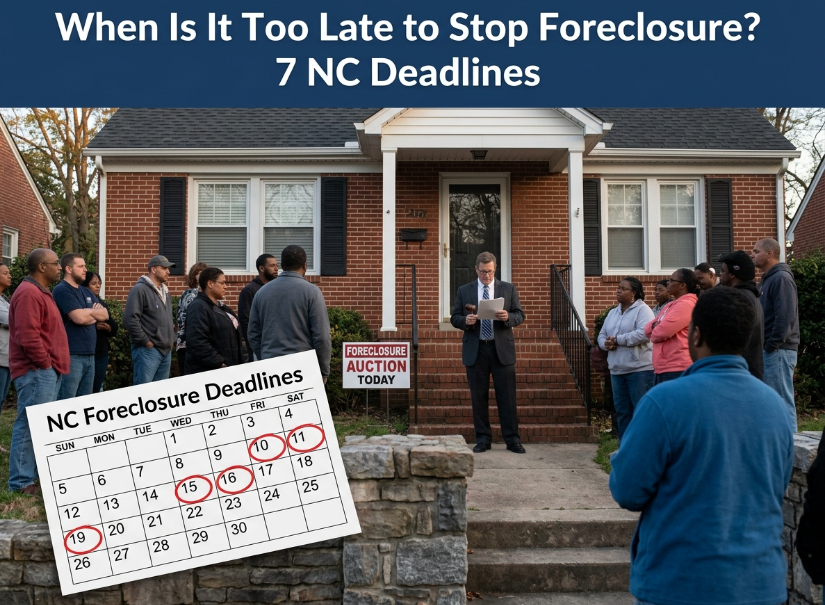
When is it too late to stop foreclosure? The safest answer is not to wait for one final date. Each stage can close a different option.
Track these seven checkpoints:
- Mortgage reaches serious delinquency
- Pre-foreclosure notice arrives
- Notice of Hearing is filed
- Clerk authorizes the foreclosure
- Foreclosure sale is scheduled
- Auction takes place
- Upset-bid period expires
The earlier you act, the more time you have to compare reinstatement, loss mitigation, legal remedies, and a voluntary sale.
If the sale date is already close, you can discuss your property and foreclosure deadline with FixItMoney to review the property side of your available options.