
Funding Support
for Carolina Homeowners
Facing foreclosure or tax issues? Need to sell fast? Get a confidential, no obligation consultation today.
When you’re in a tough spot, you don’t just need answers: you need options. Our Carolina-based funding offers fast, flexible solutions when traditional lenders won’t. We say yes when others say no. As established southern USA home buyers, we provide reliable funding solutions to property owners who need a guaranteed Carolina home cash offer on a timeline that works best for their family.
- 100% Confidential
- No Fees or Commissions
- 7 Day a Week Support
Our Simple, 3-Step Path to Your Solution
We’ve removed the stress, paperwork, and uncertainty from the process. Getting help is as simple as…

Step 1
Tell Us What’s Going On
Call us or fill out our form. There is zero pressure. This first call is 100% free, confidential, and you are under no obligation. You’ll speak with a local Carolina expert who will listen to your situation with respect and empathy.

Step 2
Receive Your Custom Solutions
This is what makes us different. We don’t have a “one-size-fits-all” approach. After a quick assessment, we will present you with multiple clear solutions. This could be a fast cash offer, a private loan to get you caught up, a plan to take over your payments, or another creative strategy. Working directly with a dedicated fast house buyer allows you to review cash terms without paying real estate commissions or staging costs.

Step 3
You Get Paid and Move Forward
You are in complete control. You pick the path that works best for you and your family. We handle all the paperwork and can close in as little as 7 days, or we can work on whatever timeline you need. Selling your home directly to local investors is often much easier than working with traditional companies that purchase homes.
Our Services
Tailored Solutions for Your Home & Finance
Our team provides personalized solutions to help homeowners protect their equity, avoid foreclosure, and move forward with confidence. We offer private capital solutions for property owners who are actively evaluating companies that buy homes for immediate cash purchases or mortgage relief.

Tell Us What’s Going On
Call us or fill out our form. There is zero pressure. This first call is 100% free, confidential, and you are under no obligation. You’ll speak with a local Carolina expert who will listen to your situation with respect and empathy.

Take Over Mortgage Payments
If you’re struggling to keep up with your mortgage in North or South Carolina, our Take Over Mortgage Payments option gives you an alternative path.

Fix & Flip Financing
Ready to transform distressed properties into profit? Our Fix & Flip Financing provides fast, flexible funding for North and South Carolina investors.

What Is Your
Biggest Challenge Right Now?
We’ve helped hundreds of homeowners across the Carolinas by focusing on their unique, personal situations. We are problem-solvers who specialize in complex cases. Find your situation below to see how we can provide an immediate, effective solution.
Behind on Property Taxes?
A delinquent tax bill is a serious threat. A tax lien can lead to a foreclosure sale by the county, and you can lose your home for a fraction of its value. We can provide the funds to pay off the taxes immediately, remove the lien, and give you time to get back on your feet. Local property owners rely on our capital resources when companies that buy houses in South Carolina offer flexible loan alternatives to save home equity.
Facing Foreclosure?
The foreclosure process in the Carolinas is fast and frightening. We can act faster. We provide immediate, certain solutions to stop the auction, protect your credit, and help you walk away with dignity and peace of mind. Property owners facing urgent auction dates turn to us when companies that buy houses in North Carolina provide immediate debt intervention strategies.
Need to Sell a Problem Property?
Inherited a house you can’t afford? Tired of bad tenants? Does your home have major foundation issues, a leaking roof, or mold? We buy houses in any condition (“as-is”) for cash. No repairs, no cleaning, no hassle. Our direct acquisition team serves as experienced cash home buyers in South Carolina who buy distressed properties without requiring repairs or cleanouts.

About Fix it Money
Fix it Money was created for one reason: to help North & South Carolina residents going through personal hardships on their home. Gary Leavitt of Leavitt Capital Group has 20+ years in work-out transactions, private lending, fix-n-flip, and new construction. His goal for Fix it Money was to give owners an option no matter where they are in the process.
As a principal builder in Phoenix, Gary developed over $70,000,000 in new construction projects, which included affordable housing, condo conversions, and multi-family units. Gary started in the business by flipping homes where he met his wife, Christine. They transitioned into full-time investors and owned/operated multiple apartment buildings, a real estate brokerage, and a property management company. Our extensive background in private transactions makes our firm a trusted choice among companies that buy houses for cash throughout North and South Carolina.
We’re Your Local Carolina Funding.
We Aren’t a National Franchise or a Slow Bank
When you’re in a tough spot, you don’t want to be a case number. You want to talk to a real person who has the flexibility and compassion to help. National “we buy houses” franchises want to give you one option: a low-ball offer. Banks give you no options.
Our goal isn’t just to buy your house; it’s to find the right solution for you. We live and work here in the Carolinas, and we are dedicated to helping our neighbors. Unlike slow institutional mortgage lenders, we work directly with owners who want to sell a house fast in North Carolina without waiting months for traditional loan underwriting.
| Feature | FixItMoney (Your Funding) | “We Buy Houses” Franchises | Banks & Lenders |
|---|---|---|---|
| Our Goal | Find a Win-Win Solution | Buy at a Steep Discount | Follow Strict Guidelines |
| Flexibility | High (Cash, Loans, Payments) | Low (Cash Offer) | None |
| Credit Check | No Credit Check Required | No | Yes |
| Fee | None. No Commissions. | None | Yes (Origination, etc.) |
| Personal Touch | Deal Directly with Our Family | Call Center / Local Rep | Banker / Loan |
| Speed | Fast (24 hours -10 days) | Fast (7–21 Days) | Slow (30–60+) |

Solutions for Every Situation, All Across the Carolinas
Find your solution—choose a service to view local markets.
Stop Foreclosure
We provide immediate, certain solutions to stop the auction and protect your credit. We are experts in both NC’s non-judicial and SC’s judicial foreclosure processes. Homeowners navigating county auctions often select our firm over traditional companies that buy homes because we offer specialized foreclosure relief options.
North Carolina Markets
- Charlotte Foreclosure Help
- Raleigh Foreclosure Help
- Greensboro Foreclosure Help
- Fayetteville Foreclosure Help
South Carolina Markets
- Charleston Foreclosure Help
- Columbia Foreclosure Help
- Greenville Foreclosure Help
- Myrtle Beach Foreclosure Help
Sell My House Fast
Get a fair cash offer and close on your schedule. We buy homes “as-is” in any condition, so you don’t need to make any repairs or clean a thing.
North Carolina Markets
- We Buy Houses Charlotte
- We Buy Houses Raleigh
- We Buy Houses Greensboro
- We Buy Houses Fayetteville
South Carolina Markets
- We Buy Houses Charleston
- We Buy Houses Columbia
- We Buy Houses Greenville
- We Buy Houses Myrtle Beach
Property Tax Delinquency Help
A tax lien can lead to a foreclosure sale by the county. We can provide the funds to pay off the taxes immediately, remove the lien, and give you time to get back on your feet.
- NC & SC Property Tax Lien Solutions
- Pay Off Delinquent Taxes Fast
Private Home Equity Funding
Banks said no? If you have equity but can’t pass a bank’s strict checks, we can provide the capital you need to pay off debt, make repairs, or handle an emergency, based on your home’s value, not your credit score.
- Access Your Home's Equity (NC/SC)
- Private Loans for Homeowners
Real Stories from Carolina Homeowners We’ve Helped
Don’t just take our word for it. See how we’ve provided real solutions to people just like you, right here in the Carolinas.
Highly Recommend !

“I was two weeks from the auction date in Charlotte and didn’t know what to do. The bank wouldn’t even talk to me. I called Fix It Money, and they were incredible. They didn’t judge me; they just listened… They bought my house, stopped the foreclosure, and saved my credit. I can’t thank them enough.”
Highly Recommend !
“I inherited a house in Charleston that needed tons of work I couldn’t afford. It was full of stuff, the roof was leaking, and I just felt overwhelmed. Fix It Money gave me a fair cash offer and bought it ‘as-is.’ I didn’t have to fix or clean a thing. The process was so easy and took a huge weight off my shoulders.”
Highly Recommend !
“The bank wouldn’t give me a loan to pay my delinquent property taxes because of my credit. I was at risk of losing my home. Fix It Money provided a small private loan using my home’s equity. The tax bill was paid, and I got back on my feet without having to sell. They were a lifesaver.”
Stop Worrying and Get Your Solution Today
Your consultation is 100% free, completely confidential, and there is zero obligation. Take the first step. Fill out the form or call us now. Find out exactly how we can help you.
Frequently Asked Questions
We believe in 100% transparency. Here are honest answers to the most common questions we get.
What if my house is in terrible condition?
That’s what we specialize in. We buy houses in any condition (“as-is”). Whether it has foundation issues, a bad roof, mold, or is full of old belongings, we’ve seen it all. You don’t need to fix or even clean anything. Leave unwanted items, and we’ll handle the rest.
Will you give me a “lowball” offer?
No. We are a family fund, not a national “lowball” franchise. Our process is transparent. We’ll explain exactly how we arrive at our offer, which is based on the property’s condition, repair costs, and current market value. We are committed to finding a fair, win-win solution that helps you and works for us.
Are there any hidden fees or commissions?
Absolutely not. The offer we make is the cash you receive. We pay all typical closing costs. There are no agent commissions, no hidden fees, and no surprises at the closing table.
How fast can you really help me?
We can often provide a solution in 24-48 hours. Once you accept an offer, we can close in as little as 7-10 days. If you need more time to move or get
your affairs in order, that’s fine too. We work on your timeline.
Are you a “foreclosure rescue scam”?
No. We are a legitimate local business. We want you to be aware of scams, which is why we will never ask you for an upfront payment (which is illegal in North Carolina) or tell you to sign over your deed without payment. We encourage you to review our process and our testimonials, and we will answer any question you have.
Latest Blogs

Why Would a Home Equity Loan Be Denied? 7 NC Reasons
Why Would a Home Equity Loan Be Denied in North Carolina? 7 Reasons to Check First
Why would a home equity loan be denied? A lender may say no because of weak credit, high monthly debt, limited usable equity, a low appraisal, hard-to-verify income, property problems, or title issues. A denial does not mean your home has no value. Start with the lender’s written reason, check the numbers behind the decision, then compare whether fixing the issue, trying another lender, or reviewing another property-based option makes sense.
Check these first:
- Credit history
- Debt-to-income ratio
- Combined loan-to-value ratio
- Appraised property value
- Qualifying income
- Property condition
- Existing liens or title problems
Fix It Money works with North Carolina homeowners who have property equity but may not fit traditional bank underwriting.
1. Credit Problems Can Cause a Home Equity Loan Denial
A denied home equity loan often starts with the borrower’s credit file. Lenders review payment history, balances, collections, bankruptcies, and recent mortgage activity before approving another loan secured by the house.
Look closely at:
- The credit score the lender actually used
- Recent late payments
- Collections or charge-offs
- High credit card balances
- Recent mortgage delinquencies
- Errors on your credit report
There is no single credit-score cutoff used by every lender. One lender may decline an application that another lender would review differently.
2. High Monthly Debt Can Block Approval
Your debt-to-income ratio, or DTI, compares your required monthly debt payments with your gross monthly income. A homeowner can have strong equity and still fail underwriting because monthly obligations are already too high.
DTI may include:
- First mortgage payment
- Auto loans
- Student loans
- Credit card minimum payments
- Other required debt payments
- Proposed home equity payment
The Consumer Financial Protection Bureau’s DTI guidance explains that lender limits vary by loan program.
A high DTI is one reason you can be denied for a home equity loan even when the property itself has plenty of value.
3. You May Have Equity but Not Enough Usable Equity
Home value alone does not determine approval. Lenders often use the combined loan-to-value ratio, or CLTV, to measure how much debt would be secured by the property after the new loan.
Example |
Amount |
|---|---|
| Home value | $400,000 |
| Existing mortgage | $300,000 |
| Requested equity loan | $50,000 |
| Total secured debt | $350,000 |
| CLTV | 87.5% |
In this example, the homeowner has $100,000 in gross equity. However, the new loan would push total secured debt to 87.5% of the home’s value.
That may exceed a lender’s program limits.
Usable equity is therefore different from total equity on paper.
4. A Low Appraisal Can Change the Loan Decision
A lender bases the equity calculation on its accepted home appraisal, not the value shown on an online estimate or the amount the homeowner believes the property is worth.
A lower appraisal reduces usable equity and raises CLTV.
Review the appraisal for:
- Incorrect square footage
- Missing renovations
- Wrong property features
- Weak comparable sales
- Incorrect bedroom or bathroom counts
- Other factual errors
If something appears wrong, ask whether the lender allows a reconsideration of value.
A valuation problem can explain why a home equity loan would be denied even when the application initially looked strong.
5. Income May Be Difficult to Verify
Traditional underwriting considers whether income can support both existing debt and the proposed home equity payment.
A borrower may have enough money coming in but still struggle to document it under the lender’s rules.
Common issues include:
- Recent job changes
- Employment gaps
- Self-employment income
- Declining business income
- Commission-based earnings
- Irregular bonuses
- Missing tax returns or pay records
If income caused the denial, ask which income figure the lender used and which documents were considered insufficient.
That answer is more useful than immediately submitting the same application somewhere else.
6. The Property Itself Can Cause the Denial
Sometimes the borrower qualifies, but the property collateral does not meet the lender’s guidelines.
This can matter for older homes, rural properties, manufactured homes, unfinished renovations, or houses with serious repairs.
Possible property issues include:
- Foundation damage
- Major roof problems
- Unfinished construction
- Manufactured-home eligibility
- Inadequate homeowners insurance
- Flood insurance requirements
- Major safety concerns
If the property caused the denial, improving your credit score will not solve that specific problem.
For homeowners whose property needs major work, comparing financing with an as-is home-sale option may be more useful than repeatedly applying for conventional financing.
7. Liens or Title Problems Can Stop the Loan
A home equity lender also cares about lien position. Existing claims against the property can make another secured loan difficult or impossible.
Problems may include:
- Delinquent property taxes
- HOA liens
- Judgment liens
- Contractor liens
- Probate issues
- Ownership disputes
- Title defects
For example, a homeowner may have substantial market equity but also owe a mortgage, delinquent taxes, and another judgment.
Those obligations reduce the equity that is actually available.
If unpaid taxes are part of the problem, review the available property-tax delinquency options before assuming another loan is the only solution.
Read the Denial Notice Before Applying Again
If you are asking why you would be denied a home equity loan, the lender’s written explanation should be your starting point.
A credit denial commonly comes with an adverse action notice explaining the main reasons for the decision or how to obtain them.
Match the reason to the response:
Denial reason |
Useful next step |
|---|---|
| Credit error | Check and dispute inaccurate information |
| High DTI | Recalculate debt and income |
| Limited equity | Review CLTV and requested amount |
| Low appraisal | Ask about valuation review |
| Income issue | Find out what documentation is missing |
| Property problem | Determine whether repairs or another option make sense |
| Title or lien problem | Identify what must be resolved |
The CFPB guidance for denied credit applications also explains consumer rights when credit-report information contributed to the decision.
Can You Get Denied After an Initial Approval?
Yes. You can get denied for a home equity loan even after an early approval or prequalification.
Final underwriting may uncover information that was not available during the first review.
Common late-stage changes include:
- Lower appraisal
- New debt
- Credit-score changes
- Employment changes
- Title problems
- Insurance problems
- Missing documents
Avoid taking on unnecessary new credit while the application is being reviewed, and respond quickly when the lender requests updated information.
What Should You Do After Traditional Financing Is Denied?
The best loan options for borrowers denied traditional home equity financing depend on why the bank declined the application.
Do not assume another loan is automatically the answer.
Situation |
Option to review |
|---|---|
| Incorrect credit information | Correct it before reapplying |
| High monthly debt | Reduce debt or request less |
| Low appraisal | Request a valuation review |
| Lender guideline mismatch | Compare another lender |
| Bank underwriting does not fit | Review property-based funding |
| More debt would strain the budget | Compare keeping versus selling |
A home equity loan is secured by the property. Adding another payment should improve the homeowner’s position, not simply postpone a larger problem.
Where Fix It Money May Fit
Fix It Money serves Carolina homeowners who need property-based solutions when traditional lending does not fit their situation.
For qualifying properties, private home equity funding may be worth comparing when usable equity exists, but conventional underwriting creates a barrier.
Before choosing any funding option, compare:
- Amount you actually receive
- Existing mortgage payoff
- Other liens
- Property value
- Repayment terms
- Total cost
- Whether the solution fixes the original financial problem
You can review how the property review works before deciding whether another property-based option belongs in your comparison.
Fix the Reason Behind the Denial First
If you can be denied a home equity loan, the next move should start with the reason, not another application.
Put these numbers on one page:
- Property value
- Mortgage payoff
- Requested loan amount
- Other liens
- Monthly debt
- Qualifying income
- Credit concerns
- Stated denial reason
Then decide whether the problem can be corrected, another lender has materially different rules, a smaller request improves the numbers, or another property-based solution makes more sense.
The goal is not simply getting approved. The better outcome is choosing an option that leaves the homeowner in a stronger position afterward.
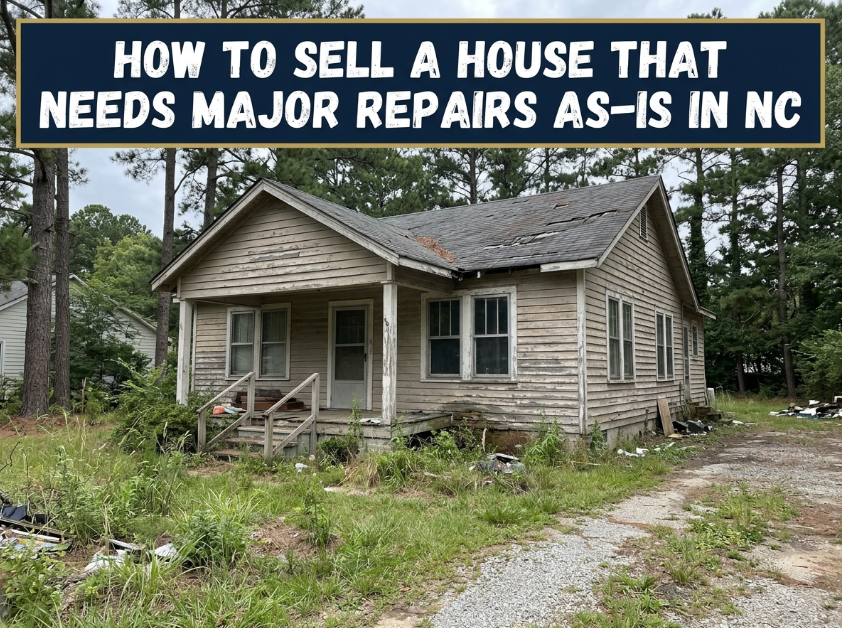
How to Sell a House That Needs Major Repairs As-Is in NC
How to Sell a House That Needs Major Repairs in North Carolina
If you need to sell a house that needs major repairs, you do not have to fix everything first. In North Carolina, the practical choices are targeted repairs, qualifying for repair funding, an as-is listing, or a direct sale in the home’s current condition. The right choice depends on repair cost, available cash, buyer financing, timeline, and expected net proceeds.
Start with four numbers:
- Current as-is value
- Estimated after-repair value (ARV)
- Real repair cost
- Mortgage and lien payoff
Separate Major Repairs From Cosmetic Work
A dated kitchen is not the same problem as a failing roof or shifting foundation. Major repairs affect safety, structural integrity, insurability, financing, or basic function. Cosmetic work mainly affects presentation.
Major repair examples include:
- Active roof leaks or severe roof deterioration
- Foundation movement or structural damage
- Failed HVAC, plumbing, or electrical systems
- Water intrusion, mold, or fire damage
- Septic, well, or major drainage problems
- Extensive deferred maintenance
Paint or countertops will not solve a defect that blocks financing or keeps damaging the property.
Can You Sell a House That Needs Major Repairs As-Is?
Yes. Selling a house that needs major repairs does not require renovating it first. You can list as-is, market to renovation-minded buyers, or consider a direct buyer that prices the work into the offer.
An as-is sale means the seller is not agreeing to complete repairs simply because the property needs them. Buyers can still inspect, negotiate, or decide the condition does not fit their financing.
Fix It Money’s as-is home-sale options include foundation issues, leaking roofs, mold, termites, fire or water damage, and unfinished properties.
Some Major Repairs Can Reduce the Financed Buyer Pool
A serious defect can affect more than buyer preference. It can affect buyer financing. Fannie Mae requires appraisers to identify conditions affecting safety, soundness, or structural integrity. A property rated C6 is not eligible for sale to Fannie Mae until those deficiencies are repaired.
Property condition |
Likely sale impact |
|---|---|
| Cosmetic wear | Usually affects presentation and price |
| Significant but functional deferred maintenance | May still finance, depending on appraisal and lender |
| Active roof leak or major system failure | May trigger repair requirements |
| Safety or structural defect | Can materially restrict conventional financing |
| Severe C6-level condition | Must be repaired before Fannie Mae eligibility |
The current Fannie Mae property-condition guidance explains why a damaged house can attract a buyer yet still struggle at appraisal or underwriting. FHA transactions can also involve HUD property standards and appraisal requirements.
What If You Cannot Afford the Repairs?
If your house needs major repairs and you want to sell, a lack of cash does not leave only one path. Compare the cost, time, and risk of each route before borrowing or accepting an offer.
Option |
Best fit |
Main trade-off |
|---|---|---|
| Make targeted repairs | One or two problems block financing | Requires upfront cash |
| Use qualifying property-based funding | Equity exists and improving the house still makes sense | Adds financing cost and obligations |
| List as-is | Time is available, and local buyers accept projects | Smaller buyer pool and negotiations |
| Direct as-is sale | Repairs are extensive, or cash is limited | Offer reflects repair cost and buyer risk |
The site’s qualifying Carolina property solutions can include fix-up funds, so repair funding may deserve comparison before assuming a sale is required.
What Is the Best Way to Sell a House That Needs Major Repairs?
The best way to sell a house that needs major repairs is the route that produces the strongest realistic result after repairs, delays, selling expenses, and risk. The highest projected sale price is not automatically the highest net result.
Use this comparison:
Repaired sale price – repair cost – holding costs – selling costs – debt payoff = estimated net proceeds
Then compare that figure with an actual as-is offer or realistic as-is listing result.
A repair-first plan can look attractive until months of mortgage payments, taxes, insurance, utilities, contractor overruns, and buyer-requested repair credits are added.
Repair Only What Changes the Outcome
When money is limited, repairs should solve a specific problem. A repair may be worth considering if it stops active damage, removes a financing barrier, improves safety, or adds more value than it costs.
Question these expenses first:
- Full kitchen or bathroom remodeling
- New flooring throughout
- Cosmetic landscaping
- Decorative fixtures
- Premium finishes
A roof leak that keeps damaging ceilings is different from dated cabinets. Spend first on conditions that change marketability or prevent further damage.
Selling As-Is Does Not Mean Hiding Known Defects
North Carolina sellers should separate the decision not to repair from the duty to deal honestly with known property problems. The North Carolina Real Estate Commission warns that sellers can face liability for knowingly concealing or misrepresenting material latent defects.
The NCREC guidance on latent defects explains the state’s disclosure framework for covered residential transactions, subject to applicable exemptions.
Keep useful records such as:
- Inspection reports
- Contractor estimates
- Structural or engineering reports
- Insurance claim documents
- Code notices
- Repair invoices and warranties
If you are unsure what must be disclosed, ask a North Carolina real estate professional or attorney.
Know the Real Repair Scope Before Spending
One estimate can be misleading when several systems are failing. Foundation movement may also damage plumbing, drywall, doors, flooring, or drainage. Roof leaks may lead to sheathing, insulation, or moisture work.
Before choosing to repair, identify:
- What must be fixed now
- What can safely wait
- Which work requires permits
- Whether the repair affects insurance
- Whether completion changes buyer financing
- How long contractors need
You need enough information to compare the repair route with selling in the property’s present condition.
How to Sell a House That Needs Major Repairs Step by Step
If you decide to sell a house that needs major repairs, make the condition part of the plan instead of letting it become a surprise after contract.
Use this sequence:
- List known roof, foundation, HVAC, plumbing, electrical, moisture, and structural problems.
- Gather reports or estimates you already have.
- Estimate current value and after-repair value separately.
- Calculate mortgage, taxes, liens, and other payoffs.
- Compare repair-first, as-is listing, and direct-sale numbers.
- Confirm disclosure and title requirements.
- Choose the route that fits your cash, timeline, and expected proceeds.
The property review process lets Carolina owners discuss a property without first cleaning or repairing it.
When a Direct As-Is Sale May Make More Sense
A direct sale deserves consideration when the repair bill exceeds available cash, several major systems have failed, conventional financing may be difficult, or managing contractors would create more risk than value.
It can also fit an inherited, vacant, rural, or heavily damaged home where certainty matters more than maximizing the repaired retail price.
Fix It Money buys qualifying Carolina properties as-is and says sellers do not need to repair or clean them first. Compare any offer with repair costs, expected market value, liens, and other selling routes.
Choose the Option That Protects Your Equity
If you need to sell a house needing major repairs, start by asking which repairs actually change the financial result, not how much a complete renovation would cost.
Put these numbers side by side:
- As-is value
- After-repair value
- Repair budget
- Holding costs
- Selling expenses
- Mortgage and liens
- Time needed to finish the work
If targeted funding creates a better outcome, repairing may make sense. If repairs consume cash without producing enough added value, an as-is sale may be cleaner. The goal is a decision that protects usable equity with the time and money you actually have.
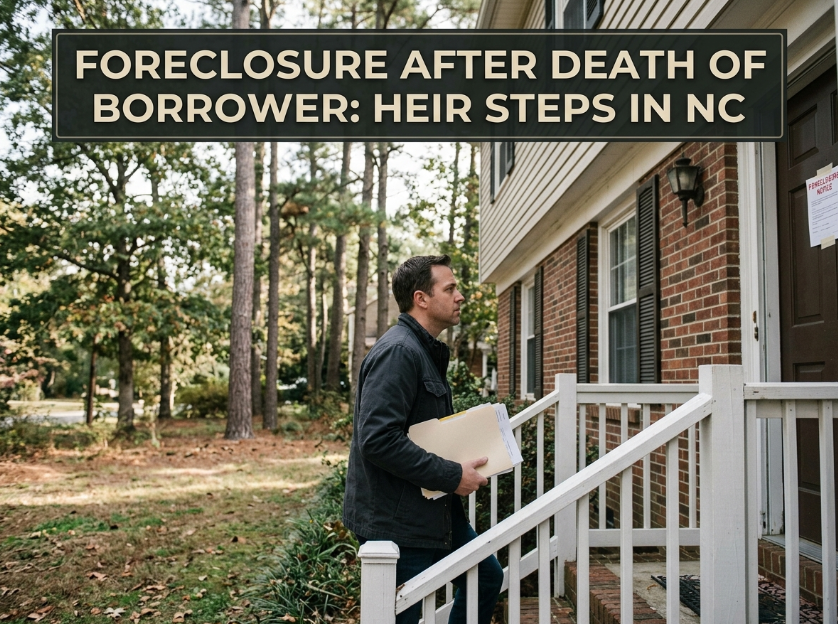
Foreclosure After Death of Borrower: Heir Steps In NC
Foreclosure After Death of Borrower in North Carolina: What Happens When No Probate Is Open?
Foreclosure after death of borrower in North Carolina does not stop because the homeowner died or because probate has not opened. The deed of trust remains enforceable, and foreclosure may continue. The family should quickly establish who can act, notify the mortgage servicer, confirm the foreclosure stage, and decide whether keeping or selling the inherited property still works.
Start with these four facts:
- The next foreclosure sale date or hearing
- The mortgage reinstatement and full payoff amounts
- Who holds title after the death
- Who has legal estate authority to act
Fix It Money works with North Carolina homeowners reviewing property-based options when an inherited mortgage, probate issue, and foreclosure happen at the same time.
What Happens to the Mortgage When Someone Dies?
Death does not cancel the mortgage. The loan remains secured by the house, so mortgage arrears can still lead to foreclosure even after the original borrower has died.
Keep these distinctions clear:
- Inheriting the property does not automatically make an heir personally liable for the deceased borrower’s debt.
- The mortgage lien still remains attached to the home.
- Ownership of the property and personal liability for the loan are separate questions.
- A mortgage after death can remain enforceable against the property.
- If payments are not made or another solution is not reached, the lender can enforce its security interest.
Can a Bank Foreclose When No Probate Estate Is Open?
Yes. North Carolina law does not make an unopened estate an automatic foreclosure pause. A secured creditor can still enforce a mortgage or deed of trust against the property.
No probate can create practical problems at the same time:
- Nobody may have court-issued estate authority yet.
- The servicer may require proof before discussing account details.
- A voluntary sale can stall over title and signatures.
- Family disagreements can consume time while foreclosure during probate continues.
- A North Carolina power-of-sale foreclosure still follows its own court process before a sale is authorized.
The North Carolina Judicial Branch foreclosure guidance explains the official power-of-sale process.
Opening Probate Can Solve the Authority Problem
Opening an estate does not itself stop foreclosure. Its value is that the Clerk of Superior Court can appoint a personal representative who has formal authority to handle estate matters.
North Carolina transfer rules also matter:
- Real estate can pass to heirs or devisees at death, but creditor rights still matter.
- Within two years after death, G.S. 28A-17-12 can affect transfers by heirs or devisees.
- A sale can be ineffective against creditors or the estate if statutory requirements are not handled correctly.
- A family should not sign a sale contract first and assume the probate estate or title issues can be fixed later.
- The inherited house foreclosure timeline may keep moving while those issues are being resolved.
When Should You Notify the Mortgage Company of Death?
Notify the mortgage servicer promptly, especially when payments are already behind. CFPB guidance says an heir may need proof of the right to the home before receiving certain mortgage information.
Ask what is required to confirm a successor in interest:
- Certified death certificate
- Will, if one exists
- Letters testamentary or letters of administration
- Deed or other proof of ownership
- Contact information for the heir or representative
- Current mortgage arrears
- Reinstatement quote
- Full payoff
- Current foreclosure sale date
The CFPB inherited-mortgage guidance explains the documents a servicer may request.
A Successor in Interest May Have Mortgage Servicing Rights
Federal mortgage rules recognize certain people who receive ownership after a borrower dies as successors in interest. Once confirmed, they generally receive important servicing protections.
That status can affect several issues:
- Continuing payments on the existing loan
- Requesting mortgage account information
- Seeking available loss mitigation
- Asking about an assumption
- Reviewing mortgage after death options
- Protection from a due-on-sale clause in certain death-related family transfers
Successor status and personal liability for the mortgage are not the same thing.
Can You Keep the Mortgage in a Dead Person’s Name?
The better question is whether the existing loan can remain while the new owner’s successor-in-interest status, title rights, and payment responsibilities are documented.
Situation |
What to verify |
| Heir wants to keep the house | Successor status, arrears, payment terms, loss mitigation |
| Heir wants to sell | Authority to sign, payoff, title requirements, foreclosure deadline |
| House has little equity | Payoff versus market value and sale costs |
| Auction is close | Current trustee, sale date, legal and closing deadlines |
Do not assume either extreme: immediate refinancing is not always required, but the inherited mortgage, ownership, and servicing rights still need to be confirmed.
How to Stop Foreclosure on Inherited Property
To stop foreclosure on inherited property, identify the exact stage first. Options may remain before the sale becomes final, but they narrow as deadlines pass.
Depending on the loan and facts, review:
- Reinstating the delinquent mortgage
- An available servicer loss-mitigation option
- Paying the mortgage off
- Selling the property before foreclosure becomes final
- Resolving mortgage arrears through an approved servicing option
- Legal remedies identified by a North Carolina attorney
Use the North Carolina foreclosure deadlines guide to identify the stage before relying on any property solution.
Important: a probate filing, phone call, buyer offer, or incomplete mortgage application does not by itself prove the foreclosure has stopped.
Can a Bank Foreclose on a House in Probate?
Yes. Probate and foreclosure can run at the same time. North Carolina law specifically preserves proceedings to enforce mortgages, deeds of trust, and other secured interests against estate property.
Probate can still make a major practical difference by creating authority to:
- Request mortgage information
- Deal with estate obligations
- Coordinate with heirs or devisees
- Sign documents when legally authorized
- Complete a lawful property sale when required
- Respond before the foreclosure sale reaches finality
If foreclosure papers have arrived, compare those dates with probate steps immediately rather than assuming the two processes are coordinated.
Selling Before Foreclosure Can Protect Remaining Equity
If nobody wants the inherited home, a voluntary sale can provide more control than foreclosure. Closing still needs time for title work, mortgage payoff, estate authority, and liens.
Calculate these numbers before accepting an offer:
- Realistic as-is or market value
- Mortgage payoff and foreclosure fees
- Property taxes, HOA balances, and other liens
- Probate or title costs
- Expected selling costs
- Time remaining before the scheduled foreclosure sale
Fix It Money works with North Carolina owners dealing with inherited mortgages, probate properties, and time-sensitive sales. Compare the as-is home-sale options only after the authority, title, and foreclosure dates are clear.
No Probate and a Close Auction Need Fast Coordination
When a parent has died, no estate is open, and an auction is scheduled, several processes may need to move together.
Build one working file containing:
- Death certificate
- Will or trust documents
- Deed
- Mortgage statements
- Foreclosure notices
- Trustee contact information
- Reinstatement and payoff quotes
- Estimated property value
- Any probate estate paperwork already started
Use the North Carolina foreclosure auction checklist to verify sale-stage details.
A North Carolina attorney should review disputed notices, title questions, legal authority, or emergency remedies. Fix It Money is not a law firm or mortgage servicer.
Decide Whether the Family Is Keeping or Selling the House
A deceased parent’s house can lose equity while relatives debate. Base the decision on the inherited mortgage, title, value, mortgage arrears, and foreclosure deadline.
If keeping the house:
- Confirm who inherited the property.
- Establish successor-in-interest status.
- Request the real arrears and reinstatement amount.
- Determine whether ongoing payments are affordable.
- Ask whether a loss-mitigation option is available.
If selling the house:
- Confirm who can sign.
- Resolve probate and title requirements.
- Get the mortgage payoff and other lien balances.
- Verify that closing can finish before foreclosure becomes final.
- Compare the as-is sale route with the remaining equity.
Fix It Money can review the property side. Legal questions belong with the Clerk, servicer, closing attorney, or qualified North Carolina counsel.
The First Goal Is Authority, Then Time, Then Equity
Foreclosure after death of borrower becomes harder when no probate is open because the foreclosure clock can keep running while authority is unresolved.
Work in this order:
- Confirm who can legally act.
- Notify the mortgage servicer.
- Verify the exact foreclosure sale date.
- Obtain the reinstatement and payoff figures.
- Calculate the property’s remaining equity.
- Decide whether keeping, loss mitigation, or a voluntary sale is realistic.
Review how our property review works if the family needs to compare the property side of those choices.
The sooner those facts are clear, the less time the family loses to assumptions about probate, the mortgage, or the foreclosure timeline.

How to Redeem Property After a Tax Sale: SC Timeline
How to Redeem Property After a Tax Sale in South Carolina Before the Deadline
How to redeem property after a tax sale in South Carolina depends on one deadline: eligible real property generally has a 12-month redemption period from the delinquent tax sale date. To cancel the sale, an eligible party must pay the county delinquent tax collector the required taxes, assessments, penalties, costs, and statutory interest before that period ends.
Start with these facts:
- Confirm the exact tax sale date.
- Request the current redemption amount.
- Verify your parcel number or TMS number.
- Ask what payment method the county accepts.
- Check whether you have received a final redemption notice.
- Act before the deadline rather than waiting for the last few days.
The 12-Month Redemption Period Starts on the Tax Sale Date
The South Carolina tax sale redemption period generally runs for 12 months from the date the property was sold for delinquent taxes. The successful bidder does not receive the tax deed at the auction.
If the property is redeemed on time, the county cancels the tax sale and handles repayment to the bidder under state law.
Use the sale date to track your deadline, not:
- the date of the original tax bill
- the first delinquency notice
- the advertisement date
- the date you opened a county letter
- the date you first learned about the sale
That difference matters because waiting from the wrong date can leave much less time than expected.
Who Can Redeem a Property After a South Carolina Tax Sale?
South Carolina law allows certain parties with a legal interest in the property to redeem it. This can include the defaulting taxpayer, a grantee from the owner, a mortgage creditor, or a judgment creditor.
If ownership is complicated, the county may ask for documents showing your authority to act.
You may need to provide:
- government-issued identification
- deed or ownership records
- estate or probate documents
- power of attorney
- mortgage or judgment documentation
- property identification information
If the property was inherited or ownership recently changed, contact the county early so title questions do not delay payment.
Redemption Costs Rise as the Year Moves Forward
When redeeming property after a tax sale, the amount due can be higher than the original unpaid tax bill. The redemption payoff can include taxes, assessments, penalties, sale costs, and interest calculated from the tax-sale bid.
Redemption timing |
Statutory interest on the bid amount |
| Months 1 through 3 | 3% |
| Months 4 through 6 | 6% |
| Months 7 through 9 | 9% |
| Months 10 through 12 | 12% |
These are statutory tiers, not a normal monthly interest rate. Waiting until the final quarter can increase the amount required to redeem.
The applicable interest is also subject to limits under South Carolina law involving the Forfeited Land Commission and the amount of the winning bid.
Get the Exact Redemption Amount From the County
Do not calculate the payoff from an old tax bill or an online estimate. Once a tax sale has occurred, the redemption amount can include costs that are not obvious from the original balance.
Ask the delinquent tax collector for a payoff that is valid through a specific date.
Your request should confirm:
- unpaid property taxes
- assessments
- penalties
- tax-sale costs
- applicable statutory interest
- the final redemption date
- accepted payment methods
- where payment must be delivered
- whether any additional documents are required
If you are close to the deadline, ask what the county considers timely payment. Do not assume mailing a check on the final day will protect your rights.
The Final Redemption Notice Does Not Extend the Deadline
South Carolina law requires notice near the end of the redemption period. The county delinquent tax collector generally mails this notice within a statutory window before the 12-month period expires.
The notice usually identifies the property, redemption amount, and final date to redeem.
Treat the notice as a warning, not extra time.
- The redemption clock is already running.
- The deadline does not restart when the notice arrives.
- A returned letter does not necessarily stop the process.
- The county’s records may use the owner’s address of record.
This is why the sale date should be confirmed directly rather than relying only on mail.
The Tax-Sale Buyer Does Not Own the Property Immediately
A common misunderstanding is that the winning bidder becomes the full owner at the auction. For qualifying South Carolina real property, the tax deed is not issued while the statutory redemption period remains open.
During that period, the property can still be redeemed by an eligible party.
If redemption is completed:
- the tax sale is canceled
- the bidder does not receive the property
- the bidder is refunded according to state law
- ownership does not pass through a tax deed
This distinction gives homeowners time to solve the tax problem before title changes.
Missing the 12-Month Deadline Changes the Situation Quickly
If nobody with a redemption right pays the required amount before the 12-month redemption period ends, the county can move toward issuing a tax title or tax deed to the purchaser or assignee.
Once the deadline has passed, the situation becomes much more serious.
If you believe the deadline has already expired:
- contact the county immediately
- confirm whether a tax deed has been prepared or issued
- ask for the current property status
- speak with a South Carolina attorney about notice or title issues
- gather every tax-sale notice you received
Do not assume the county can simply accept a late redemption payment.
A Mortgage Does Not Remove the Tax-Sale Risk
A mortgage does not make a tax sale disappear. However, the mortgage creditor may have redemption rights because a tax deed can affect the lender’s security interest in the property.
If your mortgage includes an escrow account, review the payment history immediately.
Check whether:
- taxes were supposed to be paid from escrow
- the mortgage servicer advanced money for taxes
- the servicer added the amount to your loan balance
- the servicer received tax-sale notices
- Another lienholder is taking action
Knowing who has paid what can prevent duplicate assumptions and help you understand the true amount tied to the property.
Mobile and Manufactured Homes Can Have Additional Rules
South Carolina also provides redemption rights for qualifying mobile and manufactured homes, but the process can involve additional requirements.
For example, movement of the home may be restricted during the redemption period, and other obligations may apply when the property is redeemed.
Owners should verify:
- whether the home and land are taxed together
- whether the home has been de-titled
- whether a separate mobile-home tax account exists
- whether additional rent or costs apply
- the correct payoff for that specific property
Do not rely on a standard real-estate calculation if the property includes a manufactured home.
If You Cannot Afford the Redemption Amount, Compare the Numbers Early
Knowing how to redeem property after a tax sale is only half the problem. The harder question may be how to produce the money before the deadline.
Before borrowing, selling, or using another property-based solution, write down the full financial picture.
Compare:
- current redemption payoff
- mortgage payoff
- HOA or judgment liens
- realistic property value
- available cash
- remaining home equity
- time left before the deadline
- likely costs of keeping or selling the property
A short-term solution only makes sense if it solves the immediate problem without creating a larger one.
At Fix It Money, our property-tax delinquency options may help qualifying South Carolina homeowners compare property-based solutions when paying the redemption amount directly is difficult.
Selling During the Redemption Period May Still Be Possible
A property may still be sellable while the South Carolina tax sale redemption period remains open because the tax deed has not yet been issued.
The sale must be structured carefully so the tax-sale amount and other valid liens can be handled before closing.
A closing attorney should confirm:
- the current redemption payoff
- mortgage and lien balances
- title requirements
- how redemption will be completed
- whether there is enough time to close
- whether the seller will receive any remaining equity
If an as-is sale is part of the decision, our South Carolina property options can help you compare a direct sale with keeping the property.
You can also review how our property process works before deciding whether a property sale fits your situation.
Use the Redemption Deadline to Build a Real Plan
To redeem property after a tax sale, start with the county’s records, not an online estimate. Confirm the tax sale date, written redemption amount, exact deadline, and payment instructions.
Then choose the option that fits the actual numbers.
Before making a decision, know:
- how much redemption costs today
- how much it may cost in the next interest tier
- how much equity remains
- whether another creditor is involved
- whether the property can be sold before the deadline
- whether legal or title issues need professional review
The 12-month period gives homeowners time to act, but the cost can rise, and the deadline does not restart. The earlier the numbers are clear, the more choices usually remain.

Sell a House With Delinquent Property Taxes: NC Options
How to Sell a House With Delinquent Property Taxes in North Carolina
You can usually sell a house with delinquent property taxes in North Carolina if the unpaid taxes, interest, costs, and other required liens can be cleared at or before closing. The tax debt follows the property, so the closing attorney needs an accurate payoff and enough sale proceeds to deliver clear title before the county’s tax foreclosure becomes final.
Start with five facts:
- Current property-tax payoff
- Mortgage payoff
- Other recorded liens
- Realistic property value
- Any active tax foreclosure deadline
A Tax Lien Does Not Automatically Stop a Home Sale
North Carolina property taxes become a lien against the real estate, and that lien generally stays until the taxes, penalties, interest, and allowed costs are fully paid. A buyer can still purchase the property, but the lien normally must be resolved so title can transfer cleanly.
In practical terms:
- You can still market the house.
- A title search can uncover lien issues.
- The closing attorney needs current payoff figures.
- The lien cannot simply be ignored after ownership changes.
Property-Tax Liens Have Strong Priority in North Carolina
A property-tax lien in North Carolina generally has priority over other claims against the real estate. State law gives that lien priority over most other liens regardless of whether those claims arose before or after the tax lien attached.
Sale proceeds may need to cover:
- Delinquent county or municipal taxes
- Accrued interest and permitted costs
- Mortgage and HELOC payoffs
- Other valid liens
- Closing expenses
What remains after required payoffs is the seller’s equity.
Get the Exact Tax Payoff Before You Set a Sale Plan
Do not build the sale around an old tax bill. North Carolina property taxes are due September 1, begin accruing interest January 6, and continue accruing interest until paid. Collection or foreclosure costs can also increase the amount due.
Ask the county tax office for:
- Every unpaid tax year
- Principal still owed
- Accrued interest
- Collection or foreclosure costs
- A payoff valid through a specific date
- The current legal status of the account
That current payoff statement matters far more than the amount printed on the original bill.
How Delinquent Property Taxes Are Handled at Closing
In a North Carolina residential closing, the lawyer handling the transaction reviews title and addresses prior liens that must be satisfied. Delinquent property taxes can often be paid from seller proceeds instead of being paid before the house is listed.
Closing item |
What usually happens |
| Delinquent property taxes | Paid or otherwise resolved for title |
| Interest and allowed costs | Included in the current payoff |
| Mortgage | Paid using the lender’s payoff statement |
| Other liens | Reviewed and resolved as required |
| Remaining proceeds | Disbursed after required payoffs |
This is why selling property with delinquent taxes can still work when enough equity remains.
Can You Sell a House With a Tax Lien?
Yes. You can often sell a house with a tax lien in North Carolina. The real question is whether the closing can clear the tax lien and other title problems before ownership transfers.
A workable sale usually needs:
- Enough value or other funds for required payoffs
- A buyer whose timeline fits the situation
- Enough time for the closing attorney to resolve title
If debt exceeds available equity, the transaction becomes more complicated and professional advice may be necessary.
Calculate Your Real Equity Before Accepting an Offer
Market value is not the same as the cash you receive. A mortgage, delinquent property taxes, HOA debt, judgments, and selling expenses all reduce the amount left at closing.
Use this simple calculation:
Expected sale price – mortgage payoff – tax payoff – other liens – selling costs = estimated proceeds
Run the numbers before comparing offers. A fast offer that leaves little equity may be less useful than a slower sale with stronger net proceeds, provided your tax-foreclosure timeline allows it.
A Filed Tax Foreclosure Makes Timing More Important
North Carolina counties can foreclose tax liens through a civil action under G.S. 105-374 or an in rem foreclosure under G.S. 105-375. Once legal action starts, a voluntary sale may still be possible, but timing and payoff requirements become more urgent.
If you have foreclosure papers, identify:
- Which foreclosure process is being used
- Whether a judgment has been entered
- Whether execution or a sale is scheduled
- The amount needed to satisfy the tax claim
- The last practical date a voluntary closing can occur
Do not assume a signed purchase contract pauses the county’s case.
Paying the Taxes Before Listing Is Not Always Necessary
A seller with enough cash may choose to pay the unpaid property taxes first, but that is not always required. When enough equity exists, the delinquent balance can often be handled from closing proceeds.
Paying before the sale may fit |
Paying through closing may fit |
| Balance is manageable | Cash is limited |
| Foreclosure action is close | Equity covers the payoff |
| Clearing title simplifies the sale | Attorney can obtain a current payoff |
| You may keep the house | Closing can finish before the deadline |
The better route depends on cash, equity, title, and available time.
Traditional Sale or As-Is Sale Depends on Time
A traditional listing may make sense when the house is market-ready and there is enough time. An as-is home sale can be worth comparing when repairs, cleanup, or foreclosure timing make a longer sale difficult.
Compare the routes honestly:
- Traditional sale: usually more market exposure, but more preparation and time.
- As-is sale: fewer repair demands and potentially faster closing.
- Property-based funding: may fit some owners with equity who want to keep the home.
- Legal guidance: especially important when equity is thin or foreclosure is advanced.
At Fix It Money, property-tax delinquency help outlines the property-based solutions we currently offer homeowners dealing with delinquent tax problems.
A Foreclosure Notice Means the Closing Needs Coordination
If the county has already filed a tax foreclosure, contact the tax office and a North Carolina real estate attorney before assuming the house can close on an ordinary schedule. The attorney needs to confirm the payoff, title, case status, and required timing.
Gather these records early:
- County tax notices
- Foreclosure complaint or judgment
- Mortgage payoff information
- Deed and ownership records
- HOA or judgment lien notices
- Any signed purchase agreement
One overlooked lien or deadline can change whether the planned sale works.
Inherited Property Can Have a Second Title Problem
An inherited house may have both a delinquent tax lien and an ownership problem. If the deceased owner remains on title, probate, estate administration, heir signatures, or deed work may need attention before the property can close.
Confirm early:
- Who legally owns the property
- Who has authority to sign
- Whether probate is required
- The current tax payoff
- Other recorded liens
Paying the tax balance does not automatically fix an ownership or clear-title problem.
Where Fix It Money Fits
Fix It Money works with North Carolina homeowners facing tax liens, distressed properties, and time-sensitive sales. Depending on the property and available equity, we can review an as-is sale or qualifying property-based funding rather than assuming every homeowner must sell.
You can compare our as-is home-sale process and review how our property process works before choosing a route.
Fix It Money is not a law firm or county tax office. Questions involving foreclosure rights, lien validity, probate, or title should go to the appropriate North Carolina professional.
Sell Before the Tax Problem Controls the Timeline
To sell a house with delinquent property taxes, put the tax payoff, mortgage payoff, other liens, property value, and foreclosure deadline on one page. Those numbers show whether the transaction can clear the debt and preserve useful equity.
Before choosing the sale route, answer:
- Is there enough equity for required payoffs?
- Can closing finish before the county’s next legal step?
- Will repairs delay a traditional listing?
- Is keeping the property affordable after the taxes are resolved?
A tax lien does not automatically end your ability to sell. Waiting until the county controls the calendar can remove options that were available earlier.

Unpaid Property Taxes in NC: Timeline, Costs, Options
Unpaid Property Taxes in NC: What Happens and When
Unpaid property taxes in NC become delinquent on January 6, after North Carolina real property taxes are due September 1 and remain payable at face value through January 5. There is no statewide rule that gives every homeowner two, five, or ten years before foreclosure can begin. Interest starts once the bill is delinquent, the tax lien stays attached to the property, and stronger collection action can follow. If you are behind, focus on your current balance, legal status, and next deadline instead of guessing how long the county may wait.
Fix It Money works with Carolina homeowners facing property-tax debt and other property problems, but the first step is getting those facts straight.
North Carolina Property Taxes Follow a Specific Timeline
North Carolina law sets the basic dates, but each county can move through collection at a different pace. Real property taxes are due September 1. Payment before January 6 is generally at face value. Once January 6 arrives, the bill is delinquent, and interest begins.
Date or stage |
What happens |
| September 1 | Real property taxes are due |
| Through January 5 | Taxes can generally be paid without interest |
| January 6 | Taxes become delinquent, and 2% interest applies |
| February 1 onward | Another 0.75% interest applies each month or part of a month |
| February | Tax collectors report unpaid real-property tax liens |
| March 1 through June 30 | Delinquent real-property tax liens may be advertised |
| Later | The county may use stronger collection remedies, including foreclosure |
The North Carolina General Assembly property-tax collection rules provide the statewide legal framework.
There Is No Guaranteed Number of Years Before Foreclosure
A homeowner should not assume the county must wait several years. North Carolina law does not provide a fixed statewide grace period before tax foreclosure can start. A separate rule generally requires a county or municipality to begin a tax-collection remedy within 10 years after the taxes became due, but that is an enforcement limit for the government, not a ten-year waiting period for the owner.
If your taxes are already past due, confirm:
- which tax years remain unpaid
- whether the lien has been advertised
- whether the account has gone to legal collection
- whether a foreclosure case or judgment already exists
Your own account status matters more than somebody else’s experience.
Interest Can Turn an Old Bill Into a Bigger Payoff
North Carolina applies 2% interest from January 6 through February 1. After that, interest accrues at 0.75% for each month or part of a month until the amount is paid. A $4,000 tax balance, for example, adds $80 from the initial 2% charge. Another 0.75% per month adds $30 on the $4,000 principal. Advertising, legal, attorney, or foreclosure costs can increase the payoff further, so an old tax notice may no longer show what you actually owe.
A Property-Tax Lien Is More Than a Late Payment
Once real-property taxes remain unpaid, the problem is tied directly to the property. North Carolina gives local property-tax liens strong priority, and the lien continues until the tax, interest, penalties, and allowed costs are paid. The county can also advertise delinquent real-property tax liens during the statutory advertising period, so a notice should never be treated like ordinary junk mail.
Read every notice for:
- the tax year involved
- the principal balance
- added interest or costs
- the date of the next action
- the office or attorney handling the account
North Carolina Has Two Tax-Foreclosure Methods
The North Carolina Judicial Branch identifies two legal methods for foreclosing a property-tax lien. The procedure and notices differ, which is why homeowners should work from the papers in their own case rather than a generic timeline.
Method |
Basic process |
| Civil-action foreclosure | The taxing unit files a court action under G.S. 105-374 and seeks a judgment and sale |
| In rem foreclosure | The tax collector follows G.S. 105-375, including docketing a judgment and later seeking execution |
If you are unsure where your account stands, ask whether it is only delinquent, already in collections, assigned to an attorney, or in an active foreclosure proceeding.
Partial Payments Can Help, but They Do Not Guarantee a Pause
North Carolina law generally directs tax collectors to accept partial payments unless the local governing body has directed otherwise. Local rules may also set minimum payment amounts. Payments go first toward penalties, interest, and costs, then toward tax principal. That means sending a small amount does not automatically clear the lien or stop legal action.
Before making a partial payment, ask the county:
- What is the full payoff through a specific date?
- How will this payment be applied?
- Is there a required minimum?
- Has the account already been assigned to an attorney?
- Will this payment stop the next collection step?
Get the answer from the tax office handling your property.
How to Find Unpaid Property Taxes on Your Home
To find unpaid property taxes, start with the county tax office where the property is located. Many counties offer online searches, but the online amount may not include every attorney, advertising, or court cost once collection has advanced. Ask for a current payoff rather than relying only on an older bill.
Your payoff request should show:
- every unpaid tax year
- tax principal
- accrued interest
- collection or advertising costs
- attorney or court costs, if applicable
- current legal status
- the date through which the payoff is accurate
If the property was inherited or recently transferred, also confirm that the county has the correct ownership and mailing information.
A Current Mortgage Does Not Cancel the Tax Lien
Keeping the mortgage current does not make unpaid property taxes in NC harmless. North Carolina property-tax liens generally have priority over other claims against the real estate. If your mortgage includes an escrow account, check the servicer’s payment history to see whether taxes were supposed to be paid from escrow. If both the mortgage and taxes are behind, request separate payoff figures so you know the full amount tied to the property.
You Can Often Sell Before Tax Foreclosure Is Completed
A property with unpaid taxes can often still be sold before foreclosure is completed if the closing can satisfy valid liens and other required amounts. The useful question is whether enough equity remains after everything is paid, not simply whether a buyer is willing to make an offer.
Put these numbers on one page:
- realistic property value
- mortgage payoff
- current property-tax payoff
- HOA, judgment, or other liens
- likely selling costs
- major repair costs
- the next legal or foreclosure deadline
If keeping or traditionally listing the property no longer fits the numbers or timeline, compare those options with Fix It Money’s property-tax delinquency solutions and as-is home-sale process. We can review property-based options, but legal and tax questions should still be confirmed with the appropriate professional or government office.
Make the Decision From Your Actual Numbers
The safest way to deal with unpaid property taxes in NC is to stop guessing and find out exactly where the account stands. A newly delinquent bill is different from an account already assigned for foreclosure. Start with your current tax payoff, mortgage payoff, other liens, realistic property value, and next official deadline. Those facts show whether paying the balance, arranging another property-based solution, or selling the home is realistic. Waiting because another owner stayed behind for years is risky because North Carolina law does not promise you the same timeline.
Latest Blogs

Why Would a Home Equity Loan Be Denied? 7 NC Reasons
Why Would a Home Equity Loan Be Denied in North Carolina? 7 Reasons to Check First Why would a home equity loan be denied? A
How to Sell a House That Needs Major Repairs As-Is in NC
How to Sell a House That Needs Major Repairs in North Carolina If you need to sell a house that needs major repairs, you do
Foreclosure After Death of Borrower: Heir Steps In NC
Foreclosure After Death of Borrower in North Carolina: What Happens When No Probate Is Open? Foreclosure after death of borrower in North Carolina does not