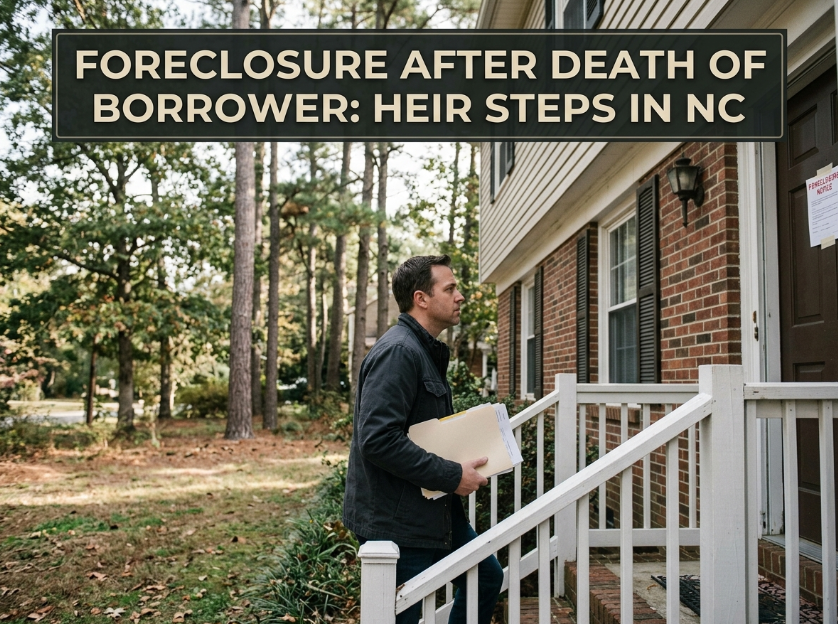
Foreclosure After Death of Borrower in North Carolina: What Happens When No Probate Is Open?
Foreclosure after death of borrower in North Carolina does not stop because the homeowner died or because probate has not opened. The deed of trust remains enforceable, and foreclosure may continue. The family should quickly establish who can act, notify the mortgage servicer, confirm the foreclosure stage, and decide whether keeping or selling the inherited property still works.
Start with these four facts:
- The next foreclosure sale date or hearing
- The mortgage reinstatement and full payoff amounts
- Who holds title after the death
- Who has legal estate authority to act
Fix It Money works with North Carolina homeowners reviewing property-based options when an inherited mortgage, probate issue, and foreclosure happen at the same time.
What Happens to the Mortgage When Someone Dies?
Death does not cancel the mortgage. The loan remains secured by the house, so mortgage arrears can still lead to foreclosure even after the original borrower has died.
Keep these distinctions clear:
- Inheriting the property does not automatically make an heir personally liable for the deceased borrower’s debt.
- The mortgage lien still remains attached to the home.
- Ownership of the property and personal liability for the loan are separate questions.
- A mortgage after death can remain enforceable against the property.
- If payments are not made or another solution is not reached, the lender can enforce its security interest.
Can a Bank Foreclose When No Probate Estate Is Open?
Yes. North Carolina law does not make an unopened estate an automatic foreclosure pause. A secured creditor can still enforce a mortgage or deed of trust against the property.
No probate can create practical problems at the same time:
- Nobody may have court-issued estate authority yet.
- The servicer may require proof before discussing account details.
- A voluntary sale can stall over title and signatures.
- Family disagreements can consume time while foreclosure during probate continues.
- A North Carolina power-of-sale foreclosure still follows its own court process before a sale is authorized.
The North Carolina Judicial Branch foreclosure guidance explains the official power-of-sale process.
Opening Probate Can Solve the Authority Problem
Opening an estate does not itself stop foreclosure. Its value is that the Clerk of Superior Court can appoint a personal representative who has formal authority to handle estate matters.
North Carolina transfer rules also matter:
- Real estate can pass to heirs or devisees at death, but creditor rights still matter.
- Within two years after death, G.S. 28A-17-12 can affect transfers by heirs or devisees.
- A sale can be ineffective against creditors or the estate if statutory requirements are not handled correctly.
- A family should not sign a sale contract first and assume the probate estate or title issues can be fixed later.
- The inherited house foreclosure timeline may keep moving while those issues are being resolved.
When Should You Notify the Mortgage Company of Death?
Notify the mortgage servicer promptly, especially when payments are already behind. CFPB guidance says an heir may need proof of the right to the home before receiving certain mortgage information.
Ask what is required to confirm a successor in interest:
- Certified death certificate
- Will, if one exists
- Letters testamentary or letters of administration
- Deed or other proof of ownership
- Contact information for the heir or representative
- Current mortgage arrears
- Reinstatement quote
- Full payoff
- Current foreclosure sale date
The CFPB inherited-mortgage guidance explains the documents a servicer may request.
A Successor in Interest May Have Mortgage Servicing Rights
Federal mortgage rules recognize certain people who receive ownership after a borrower dies as successors in interest. Once confirmed, they generally receive important servicing protections.
That status can affect several issues:
- Continuing payments on the existing loan
- Requesting mortgage account information
- Seeking available loss mitigation
- Asking about an assumption
- Reviewing mortgage after death options
- Protection from a due-on-sale clause in certain death-related family transfers
Successor status and personal liability for the mortgage are not the same thing.
Can You Keep the Mortgage in a Dead Person’s Name?
The better question is whether the existing loan can remain while the new owner’s successor-in-interest status, title rights, and payment responsibilities are documented.
Situation |
What to verify |
| Heir wants to keep the house | Successor status, arrears, payment terms, loss mitigation |
| Heir wants to sell | Authority to sign, payoff, title requirements, foreclosure deadline |
| House has little equity | Payoff versus market value and sale costs |
| Auction is close | Current trustee, sale date, legal and closing deadlines |
Do not assume either extreme: immediate refinancing is not always required, but the inherited mortgage, ownership, and servicing rights still need to be confirmed.
How to Stop Foreclosure on Inherited Property
To stop foreclosure on inherited property, identify the exact stage first. Options may remain before the sale becomes final, but they narrow as deadlines pass.
Depending on the loan and facts, review:
- Reinstating the delinquent mortgage
- An available servicer loss-mitigation option
- Paying the mortgage off
- Selling the property before foreclosure becomes final
- Resolving mortgage arrears through an approved servicing option
- Legal remedies identified by a North Carolina attorney
Use the North Carolina foreclosure deadlines guide to identify the stage before relying on any property solution.
Important: a probate filing, phone call, buyer offer, or incomplete mortgage application does not by itself prove the foreclosure has stopped.
Can a Bank Foreclose on a House in Probate?
Yes. Probate and foreclosure can run at the same time. North Carolina law specifically preserves proceedings to enforce mortgages, deeds of trust, and other secured interests against estate property.
Probate can still make a major practical difference by creating authority to:
- Request mortgage information
- Deal with estate obligations
- Coordinate with heirs or devisees
- Sign documents when legally authorized
- Complete a lawful property sale when required
- Respond before the foreclosure sale reaches finality
If foreclosure papers have arrived, compare those dates with probate steps immediately rather than assuming the two processes are coordinated.
Selling Before Foreclosure Can Protect Remaining Equity
If nobody wants the inherited home, a voluntary sale can provide more control than foreclosure. Closing still needs time for title work, mortgage payoff, estate authority, and liens.
Calculate these numbers before accepting an offer:
- Realistic as-is or market value
- Mortgage payoff and foreclosure fees
- Property taxes, HOA balances, and other liens
- Probate or title costs
- Expected selling costs
- Time remaining before the scheduled foreclosure sale
Fix It Money works with North Carolina owners dealing with inherited mortgages, probate properties, and time-sensitive sales. Compare the as-is home-sale options only after the authority, title, and foreclosure dates are clear.
No Probate and a Close Auction Need Fast Coordination
When a parent has died, no estate is open, and an auction is scheduled, several processes may need to move together.
Build one working file containing:
- Death certificate
- Will or trust documents
- Deed
- Mortgage statements
- Foreclosure notices
- Trustee contact information
- Reinstatement and payoff quotes
- Estimated property value
- Any probate estate paperwork already started
Use the North Carolina foreclosure auction checklist to verify sale-stage details.
A North Carolina attorney should review disputed notices, title questions, legal authority, or emergency remedies. Fix It Money is not a law firm or mortgage servicer.
Decide Whether the Family Is Keeping or Selling the House
A deceased parent’s house can lose equity while relatives debate. Base the decision on the inherited mortgage, title, value, mortgage arrears, and foreclosure deadline.
If keeping the house:
- Confirm who inherited the property.
- Establish successor-in-interest status.
- Request the real arrears and reinstatement amount.
- Determine whether ongoing payments are affordable.
- Ask whether a loss-mitigation option is available.
If selling the house:
- Confirm who can sign.
- Resolve probate and title requirements.
- Get the mortgage payoff and other lien balances.
- Verify that closing can finish before foreclosure becomes final.
- Compare the as-is sale route with the remaining equity.
Fix It Money can review the property side. Legal questions belong with the Clerk, servicer, closing attorney, or qualified North Carolina counsel.
The First Goal Is Authority, Then Time, Then Equity
Foreclosure after death of borrower becomes harder when no probate is open because the foreclosure clock can keep running while authority is unresolved.
Work in this order:
- Confirm who can legally act.
- Notify the mortgage servicer.
- Verify the exact foreclosure sale date.
- Obtain the reinstatement and payoff figures.
- Calculate the property’s remaining equity.
- Decide whether keeping, loss mitigation, or a voluntary sale is realistic.
Review how our property review works if the family needs to compare the property side of those choices.
The sooner those facts are clear, the less time the family loses to assumptions about probate, the mortgage, or the foreclosure timeline.