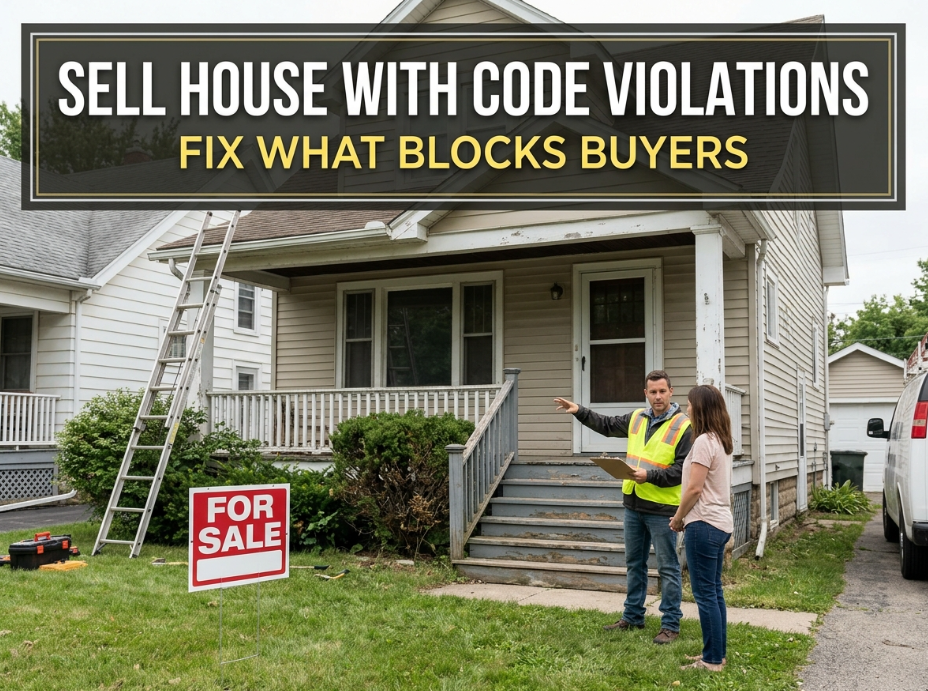
Sell House With Code Violations in NC: Which Problems Actually Block a Buyer?
You can sell a house with code violations in North Carolina, but not every violation creates the same obstacle. Minor issues may only affect price, while unsafe electrical work, structural defects, illegal occupancy, active enforcement orders, or municipal liens can disrupt financing, title, insurance, or closing. First, identify exactly what the notice says and what the buyer needs to close.
Sort the problem into four buckets:
- Condition problem
- Permit or use problem
- Enforcement problem
- Fine or lien problem
A Code Violation Does Not Automatically Make the House Unsellable
If you are selling a house with code violations, the notice itself does not automatically erase your ability to transfer ownership. What matters is the underlying defect, local enforcement status, buyer financing, and whether unpaid charges affect title.
A peeling exterior surface and an unsafe electrical panel can both be violations, yet they create very different transaction risks. Treating every notice as equally serious can lead to unnecessary repairs.
Minor Violations Usually Change Price More Than Buyer Eligibility
Some problems are closer to deferred maintenance than true deal blockers. A financed buyer may still proceed when the condition is minor and does not affect safety, soundness, or structural integrity.
Examples that may be more negotiable include:
- Minor exterior maintenance
- Small non-safety repair items
- Worn finishes
- Limited yard or nuisance issues
- Easily corrected handrails or trim items
Fannie Mae permits certain minor conditions in an as-is appraisal when they do not affect safety, soundness, or structural integrity. The exact defect matters more than the phrase “code violation.”
Safety and Structural Problems Can Stop a Financed Buyer
The biggest financing problems involve defects that threaten safety, soundness, or structural integrity. These can trigger repair requirements before a lender will complete the loan.
Common high-friction conditions include:
- Unsafe wiring or electrical service
- Serious foundation or framing damage
- Active roof leaks
- Dangerous stairs, decks, or porches
- Failed plumbing affecting habitability
- Fire hazards
- Unsafe occupancy conditions
Under Fannie Mae property-condition requirements, serious deficiencies may require repair before the loan can meet eligibility requirements.
An Open Permit Is Different From an Unsafe House
When selling a house not up to code, confirm whether the problem is an open permit, unpermitted construction, a failed inspection, or an unsafe condition. Those are not interchangeable.
An unfinished permit may require paperwork or final inspection. Unpermitted structural work may need corrective construction. An unsafe-building case can create stronger occupancy and enforcement consequences.
Ask the local office for:
- The case number
- Current violation status
- Required corrective action
- Permit and inspection history
- Next deadline
- Outstanding charges
- Any occupancy restriction
Do not pay for repairs until you know which problem you are curing.
Illegal Use or Occupancy Can Change the Buyer’s Entire Plan
Some violations affect how the property may legally be used. An illegal bedroom, converted garage, unapproved apartment, or prohibited occupancy can affect value even when the structure looks fine.
For how to sell a house with code violations, this matters because buyers price property using bedroom count, rentable units, square footage, and intended use.
A use violation can affect:
- Appraised value
- Rental assumptions
- Insurance
- Buyer financing
- Zoning compliance
- Future occupancy
If the buyer cannot legally use the space as expected, the issue may matter more than repair cost.
Unsafe-Building Orders Are a Different Level of Risk
A normal code notice should not be confused with formal unsafe-building action. North Carolina law allows local inspectors to address buildings that are dangerous because of defective construction, unsafe wiring, decay, fire hazards, or similar conditions.
Local government may also act to prevent occupancy. In serious cases, removal or demolition can occur through statutory procedures, and qualifying government costs can become a lien.
That is why this article stays separate from a condemned-house guide. Formal unsafe-building enforcement creates a different legal and timing problem.
Fines and Municipal Liens Can Create a Closing Problem
A buyer may accept the physical violation but still face closing trouble if municipal charges have become recorded liens or other title obligations. Those balances can reduce seller proceeds and may need to be handled through the closing attorney.
Before accepting an offer, identify:
- Current fines
- Abatement charges
- Recorded municipal liens
- Interest or administrative costs
- Mortgage and HELOC payoffs
- Other judgments affecting title
This separates a property-condition problem from a title-payoff problem.
Can You Sell a House With Code Violations As-Is?
Yes, can you sell a house with code violations as-is? In many cases, an as-is buyer can accept repair responsibility after closing, but an as-is clause does not cancel the violation, remove a lien, override an occupancy restriction, or guarantee every enforcement issue transfers cleanly.
A cash buyer removes lender property-condition requirements, but the buyer still needs to understand the code case, title, repair scope, and deadlines.
Our as-is home sale options include North Carolina houses with code violations and major repair problems.
Fix the Violation Only When the Math Supports It
Repairing before sale can widen the buyer pool, but not every cure returns its cost. Compare the repair expense with the value and financing access it may restore.
Decision factor |
Fix before sale |
Sell with violation |
| Upfront cash | Higher | Usually lower |
| Buyer pool | Potentially wider | Often narrower |
| Financing risk | Lower if cure is accepted | Can remain high |
| Time | Repair and reinspection needed | Potentially faster |
| Uncertainty | Seller carries repair risk | Buyer prices risk |
A small correction that restores normal financing is very different from a major structural cure with uncertain resale benefit.
Buyer Financing Is Not an All-or-Nothing Question
Current competitors often imply that conventional, FHA, or VA buyers cannot purchase any property with code violations. That is too broad. Financing depends on condition and loan program.
Minor deferred maintenance can sometimes remain. Defects affecting safety, soundness, or structural integrity are more likely to require repair.
The better seller question is: what specific condition is preventing this buyer’s lender from approving the property?
North Carolina Disclosure Rules Need Careful Handling
North Carolina’s Residential Property Disclosure Act covers building codes, land-use restrictions, and government notices among the conditions addressed for covered residential transfers.
The statute allows an owner, in applicable transactions, to disclose actual knowledge or select “no representation” for property-condition items. Licensed brokers have separate duties to discover and disclose material facts.
Review North Carolina’s residential disclosure law and discuss a notice with your broker or attorney rather than relying on a generic online statement.
A Buyer Should Price the Actual Cure, Not a Mystery Discount
When you sell my house with code violations, a buyer may deduct repair costs, permit risk, holding time, and uncertainty. Ask what work and assumptions sit behind the deduction.
Fix It Money’s cash-offer calculation guide explains how after-repair value and repair costs can affect a direct offer.
Ask any buyer to explain:
- Which violations they priced
- Expected repair costs
- Permit assumptions
- Lien payoff assumptions
- Buyer fees and closing costs
- Contract contingencies
- Estimated seller proceeds
A lower offer may reflect real cure costs, or it may include a large risk cushion. Understanding the difference protects equity.
Choose the Sale Route Based on the Actual Blocker
To sell a house with code violations in North Carolina, stop treating every violation as the same problem. Determine whether the issue affects condition, permitted use, occupancy, financing, title, or enforcement timing.
Then compare the cost of curing that blocker with the value of reopening the buyer pool. If repair economics do not work, Fix It Money’s property review process can provide an as-is comparison without requiring repairs first.
The strongest decision solves the real obstacle without spending more than the additional equity or buyer access it creates.
FAQs
Can you sell a house with code violations in North Carolina?
Yes. Many properties can still be sold, but financing, occupancy restrictions, enforcement orders, municipal liens, and the specific defect can affect how the transaction closes.
Which code violations are most likely to stop financing?
Safety, soundness, structural, electrical, plumbing, roof, foundation, and serious habitability defects are more likely to trigger lender-required repairs than minor deferred-maintenance items.
Can you sell a house with an open permit?
Sometimes. An open permit may require final inspection, corrective work, or documentation. Confirm the permit status and required cure with the local jurisdiction before promising anything.
Does selling as-is remove code violations?
No. An as-is contract may shift repair responsibility, but it does not automatically erase enforcement orders, liens, occupancy restrictions, fines, or local-government requirements.
Should you fix code violations before selling?
Fix them when the cure predictably reopens financing or adds more value than it costs. Otherwise, compare a documented as-is sale with the realistic repair-first outcome.