
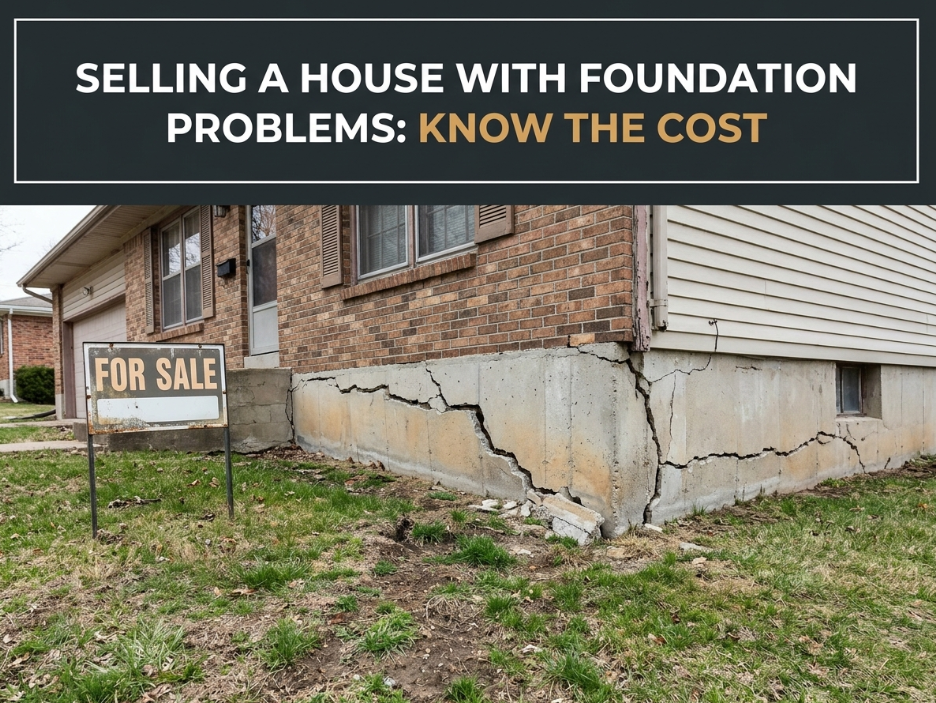
Selling a House With Foundation Problems: How to Stop Guessing at Repair Costs
Selling a house with foundation problems is possible in North Carolina, but the strongest decision starts with evidence, not a rough contractor guess or a buyer’s worst-case discount. Confirm what is actually moving, price one defined repair scope, compare as-is and repaired value, then choose whether to fix, list with disclosure, or sell as-is.
Start with four things: a structural diagnosis, written repair scope, comparable bids, and a realistic net-proceeds comparison.
Can You Sell a House With Foundation Problems in North Carolina?
Yes. Can you sell a house with foundation problems? Usually, the issue changes pricing, disclosure, inspections, financing, and the buyer pool rather than making the property unsellable.
Your practical routes are:
- Repair before listing.
- List with the known issue and documentation.
- Negotiate using repair estimates or a price adjustment.
- Sell as-is to a buyer prepared to handle structural work.
Stop Guessing and Find Out What Is Actually Wrong
A visible crack does not tell you the full foundation repair cost. Stair-step cracking, sloping floors, sticking doors, wall movement, or crawl-space moisture may have different causes and repair scopes.
Start with diagnosis, not price:
- Document cracks and movement.
- Note drainage and standing-water problems.
- Gather prior repair records.
- Ask whether movement appears active or old.
- Get qualified structural input when symptoms justify it.
A defined problem makes contractor bids comparable instead of forcing you to compare different assumptions.
Use the Right Professional for the Right Question
When selling a home with foundation problems, a general inspection can identify warning signs, but a structural concern may need deeper evaluation before you decide what to spend.
Each professional answers a different question:
- Home inspector: What visible conditions need attention?
- Structural engineer: What is happening structurally?
- Foundation contractor: What will the specified repair cost?
- Local inspection office: Are permits or inspections required?
North Carolina guidance treats visible foundation deterioration, uneven floors, and structural defects as material-fact red flags that deserve appropriate investigation.
Build a Repair Estimate That Buyers Can Understand
The best way to handle foundation repair before selling a house is to price a defined scope. Ask multiple contractors to bid the same recommended work.
A complete estimate should identify:
- Structural work or stabilization
- Drainage or moisture correction
- Excavation and access
- Permit and inspection costs
- Related finish restoration
- Engineering requirements
- Warranty terms
- Work excluded from the quote
Keep a contingency for hidden conditions. The goal is not the cheapest bid. It is understanding the likely total cost.
Repair First or Sell As-Is? Compare the Numbers
Selling a house with foundation issues becomes easier to evaluate when you compare net outcomes instead of a repaired retail price with an as-is offer.
Decision Factor |
Repair Before Selling |
Sell As-Is |
| Upfront cash | Higher | Usually lower |
| Time | Longer | Often shorter |
| Construction risk | Seller carries it | Buyer prices it |
| Buyer pool | Can widen | Smaller |
| Financing | May become easier | Can be harder |
| Price potential | Usually higher | Usually lower |
A higher repaired price does not automatically produce more money after repairs, holding costs, and selling expenses.
Calculate the Repair Spread Before Spending Money
To sell a house with foundation problems without guessing, compare the value created by the repair with the full cost required to reach that condition.
Illustration only:
- Expected repaired sale price: $350,000
- Foundation and drainage work: $28,000
- Related restoration and permits: $7,000
- Extra holding and selling costs: $10,000
- Estimated amount before mortgage payoff: $305,000
Now compare that result with a credible as-is sale. This prevents a $28,000 repair quote from being mistaken for the entire financial cost.
Buyer Financing Can Change the Best Selling Route
A buyer may love the house and still struggle to close if an appraisal, inspection, insurer, or lender flags active structural damage. That makes selling a house with foundation problems partly a financing question.
Potential friction includes:
- Lender-required repairs
- Structural inspections
- Appraisal conditions
- Insurance concerns
- Repair escrow restrictions
- Buyer cancellations during due diligence
North Carolina Disclosure Requires Careful Documentation
North Carolina’s Residential Property Disclosure Act covers many one-to-four-unit residential transfers, subject to exemptions. Its disclosure framework specifically includes the foundation and other structural components.
For selling a home with foundation issues, keep reports, estimates, invoices, warranties, drainage records, and permits together. Review the North Carolina Residential Property Disclosure Act and discuss your specific facts with an appropriate professional.
Finished Repairs Need Paperwork, Not Just Fresh Concrete
A repaired foundation can still worry buyers if nobody can explain what was done. Selling a house with foundation issues after repair is stronger when documentation makes the history understandable.
Keep copies of:
- Engineer reports
- Contractor scope and invoice
- Permit records where required
- Inspection approvals
- Before-and-after photos
- Drainage improvements
- Transferable warranties
Permit requirements vary by jurisdiction, so check the local city or county inspection office before assuming structural work is exempt.
Selling As-Is Can Be Rational When the Scope Is Uncertain
Can I sell a house with foundation problems without completing the repair? Yes. An as-is sale can make sense when the project is large, uncertain, hard to finance, or one of several major property problems.
Fix It Money’s as-is home sale options specifically include foundation issues and other major repairs. That does not make an as-is sale automatically better.
Compare it seriously when:
- You cannot comfortably fund the work.
- Several systems need major repairs.
- The repair schedule conflicts with your move.
- Hidden-condition risk is high.
- You prefer price certainty.
Review Repair Deductions Instead of Accepting a Mystery Discount
When you sell a house with foundation issues, a buyer may reduce the offer for repair costs, uncertainty, financing risk, and resale work. Ask what assumptions are behind the deduction.
Fix It Money’s property review process uses property value and repair costs as core inputs.
Ask for clarity on:
- Expected after-repair value
- Foundation repair scope
- Other major deductions
- Fees and closing costs
- Expected timeline
- Estimated cash after mortgage and liens
Repair First When the Scope Is Controlled, and the Equity Gain Is Clear
Foundation repair before selling a house can make sense when the problem is well defined, qualified bids are consistent, the work is manageable, and the expected equity gain exceeds the total cost.
Repair is stronger when:
- The rest of the house is market-ready.
- The repair plan is specific.
- You have cash and contingency.
- The timeline is flexible.
- Documentation can transfer.
- Conventional buyers matter to your strategy.
Do not repair solely because a higher future list price sounds attractive. Calculate the net result.
Sell As-Is When Uncertainty Costs More Than the Possible Upside
Selling a house in poor condition may be more practical when foundation work is only one part of a larger repair burden. The key comparison is certainty versus the expected return from managing the project yourself.
Consider an as-is route when structural work, drainage, roof, HVAC, plumbing, or interior damage combine into a project you do not want to finance or supervise.
You can review Fix It Money’s Carolina property options after you have repair information, so the direct-sale number can be compared with a real repair-first scenario.
Make the Decision From Evidence, Not the Crack in the Wall
Selling a house with foundation problems works best when you reduce uncertainty before choosing a route. Diagnose the issue, price one defined repair scope, document known conditions, and compare realistic net proceeds.
The best option is the path that leaves the stronger financial result after repair risk, time, buyer financing, holding costs, and your own tolerance for managing structural work are counted.
Five Direct-Answer Questions
Can you sell a house with foundation problems in North Carolina?
Yes. Foundation problems can reduce buyer demand and complicate financing, but a North Carolina owner can still repair, disclose, negotiate, or sell the property as-is.
Should you repair foundation problems before selling?
Not always. Repair first when the scope is clear and expected equity gain exceeds total repair, holding, permitting, financing, and selling costs before listing.
How do you estimate foundation repair costs before selling?
Start with a qualified structural evaluation, then get multiple contractors to price the same repair scope. Include drainage, permits, restoration, engineering, access, and contingency costs.
Can foundation problems stop a buyer from getting financing?
They can. Active structural problems may trigger appraisal, insurance, inspection, or lender conditions, which can shrink the pool of eligible buyers, change negotiations, or delay closing.
Do foundation problems have to be disclosed in North Carolina?
North Carolina disclosure rules cover foundation and structural components for many residential transfers, subject to exemptions. Handle known defects and professional reports carefully.