
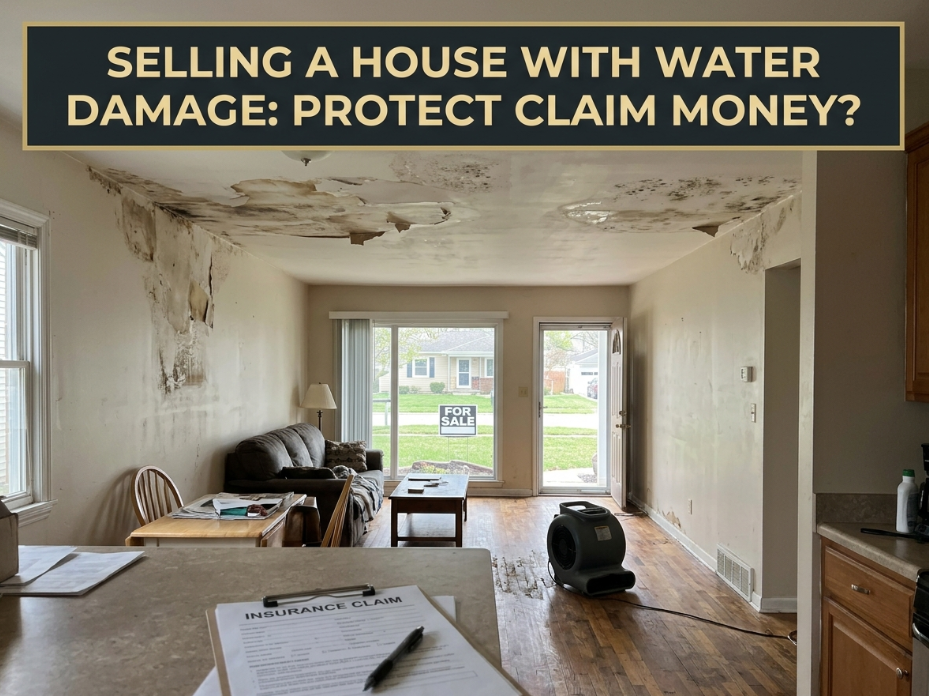
Selling a House With Water Damage in NC While the Insurance Claim Is Still Open
Selling a house with water damage in North Carolina is possible while an insurance claim remains open, but the claim and sale must be coordinated. Confirm what the insurer approved, who controls unpaid proceeds, whether repairs affect replacement-cost benefits, and whether the buyer can finance and insure the property’s current condition before agreeing to closing terms.
Before accepting an offer, know four facts:
- What caused the water damage.
- What claim payments remain outstanding.
- What repairs remain unfinished.
- Who controls any insurance check.
An Open Insurance Claim Does Not Automatically Stop the Sale
An open claim does not make the house unsellable. The real issue is whether water intrusion, restoration, financing, insurance, and claim payments can be handled before closing.
A claim may remain open because:
- The adjuster is reviewing supplements.
- Depreciation remains unpaid.
- Repairs are incomplete.
- Additional damage was discovered.
- A mortgage servicer still controls funds.
Know Exactly Where the Insurance Claim Stands
Before selling a house with water damage, request the latest claim estimate and payment history. Separate money already paid from amounts subject to documentation, reinspection, lender approval, policy limits, or repair completion.
North Carolina DOI explains that replacement-cost coverage may initially pay actual cash value, with additional eligible reimbursement after qualifying repairs. Review NC DOI guidance on claim values
Your claim file should show:
- Date and cause of loss
- Adjuster’s estimate
- Deductible
- Actual cash value
- Replacement cost value
- Recoverable depreciation
- Payments already issued
- Supplements still under review
Your Mortgage Company May Control Part of the Payout
North Carolina DOI notes that an insurance repair check may name the mortgage lender, requiring cooperation with the servicer before funds are released. Do not count restricted proceeds as seller cash until their treatment at closing is confirmed.
Ask the servicer:
- Is it a co-payee or loss payee?
- Are funds held in a restricted account?
- What inspections release each draw?
- What happens to held funds at payoff?
- Does selling affect unreleased repair money?
The Cause of Water Damage Changes the Insurance Question
A burst pipe, roof leak, sewer backup, groundwater intrusion, and river flooding can fall under different policy provisions. Standard homeowners coverage generally does not treat every form of water damage the same, so confirm the cause and coverage before planning around claim money.
Check:
- The stated cause of loss
- Covered and excluded damage
- Deductible
- Policy limits
- Flood or backup endorsements
- Remaining insurer requirements
Stop Ongoing Damage Even If You Plan to Sell
If the leak remains active, basic mitigation can protect both the property and claim. Stop the source when safely possible, dry affected materials, and preserve evidence before major cleanup. The goal is to prevent avoidable deterioration while keeping the loss understandable.
Document when practical:
- Photos and video
- Moisture locations
- Damaged flooring and drywall
- Crawl-space or attic conditions
- Plumbing or roof source
- Contractor estimates
- Emergency mitigation invoices
Can the House Close Before the Insurance Claim Does?
Potentially, yes. The purchase contract should address remaining repairs, eligible insurance proceeds, and responsibility if the insurer changes its estimate after closing. Never assume unpaid insurance money automatically follows the property or automatically remains with the seller.
Confirm before contract signing:
- Whether the seller keeps eligible claim rights
- Whether any assignment is permitted
- Whether the mortgage servicer must consent
- Who completes unfinished repairs
- How outstanding payments are handled
Buyer Financing Depends More on Condition Than Claim Status
A lender may care less about the word “open” than the condition securing its mortgage. Active seepage, unsafe systems, dampness, structural deterioration, or substantial unfinished work can trigger repair or professional-inspection requirements.
Possible financing friction includes:
- Active leaks
- Damaged framing or subfloor
- Unsafe electrical components
- Significant dampness or mold
- Unfinished reconstruction
- Missing professional reports
A cash buyer removes the buyer’s mortgage underwriting, not the seller’s insurance or disclosure responsibilities.
North Carolina Disclosure Requires Careful Handling
North Carolina’s Residential Property Disclosure Act applies to many residential transfers. Owners may disclose actual knowledge or select “no representation” for covered condition questions, while licensed brokers have separate material-fact duties. The revised state form also gives flooding and related issues more attention. Review North Carolina’s Residential Property Disclosure Act
Keep available:
- Leak and flooding history
- Inspection reports
- Repair invoices
- Claim documents
- Moisture or remediation records
If the disclosure becomes materially inaccurate after delivery, address the change before closing.
Repair First or Sell While the Claim Is Open?
Neither route wins automatically. Compare the equity created by repairs with your deductible, uncovered restoration, holding costs, claim delays, contractor risk, and replacement-cost benefits tied to finished work. A higher repaired price does not guarantee higher net proceeds.
Decision factor |
Repair before sale |
Sell with claim open |
| Upfront coordination | Higher | Lower |
| Retail buyer access | Usually broader | Often narrower |
| Claim completion | Easier to document | Must be coordinated |
| Financing | Often easier | Condition may restrict it |
| Hidden-damage risk | Seller carries it | Buyer prices it |
| Timeline | Usually longer | Can be shorter |
Calculate What You Keep From Both Paths
The insurance estimate is not seller profit. Calculate both routes using money you can realistically receive, actual restoration exposure, mortgage payoff, transaction costs, and time. Use confirmed numbers, not the insurer’s headline estimate.
Repair-first calculation:
- Repaired sale proceeds
- Plus claim benefits actually available
- Minus deductible and uncovered repairs
- Minus holding and selling costs
- Minus mortgage payoff and closing obligations
Sell-now calculation:
- As-is sale proceeds
- Plus insurance benefits confirmed for the seller
- Minus mortgage payoff
- Minus transaction costs and agreed credits
- Minus unresolved repair obligations
Hidden Moisture Can Change the Repair Scope
Water can travel behind cabinets, floors, insulation, and crawl spaces before stains appear. Buyers may price uncertainty aggressively when the full restoration scope is unknown. Keep this decision centered on the water loss. Mold becomes a separate remediation issue only when it is actually present or identified.
Useful evidence includes:
- Moisture readings
- Drying records
- Plumbing or roof invoices
- Restoration estimates
- Structural evaluation when needed
- Mold assessment when justified
Make an As-Is Buyer: Explain the Water-Damage Deduction
At Fix It Money, our as-is home sale options include North Carolina homes with fire or water damage, while our property review process uses property value, repair costs, and buyer margin. An as-is offer creates a useful comparison before claim funds are committed to repairs.
Ask the buyer to explain:
- Water-damage repair deduction
- Structural or mold allowance
- After-repair value
- Buyer margin
- Fees and closing costs
- Inspection contingencies
- Closing date
- Estimated net proceeds
Do Not Let the Claim Become a Closing-Day Surprise
Before signing, coordinate the insurer, mortgage servicer, buyer, closing attorney, and any contractor with unresolved work or payment. Fix It Money’s cash-offer calculation guide can help you compare repair deductions with a current-condition price.
Before closing, confirm:
- Claim status
- Remaining eligible payments
- Lender-controlled funds
- Repair responsibility
- Buyer financing requirements
- Contract treatment of claim proceeds
- Final mortgage payoff
Choose the Route That Protects the Claim and Your Equity
When selling a house with water damage, treat the open claim as part of the transaction math, not free money or an automatic barrier. Confirm payment conditions, repair scope, buyer requirements, and disclosure, then compare repaired and as-is net proceeds.
Fix It Money’s Carolina property and funding options provide another comparison point. For qualifying Carolina properties, a property-based funding solution may also deserve review if repairing makes financial sense, but claim timing creates a cash-flow problem.
FAQs
Can you sell a house with water damage while an insurance claim is open?
Yes. The claim does not automatically block a sale, but property condition, lender interests, unpaid insurance benefits, disclosure, and contract terms should be coordinated before closing.
Who gets the insurance money if the house sells first?
That depends on the policy, claim stage, mortgage servicer, and transaction documents. Do not assume unpaid proceeds automatically belong to either the seller or buyer.
Will a buyer’s lender finance a water-damaged house?
Possibly. Minor conditions may be acceptable, while active seepage, unsafe systems, structural damage, dampness, or unfinished repairs can trigger inspections, repairs, or underwriting restrictions before closing.
Do North Carolina sellers have to disclose water damage?
North Carolina uses a statutory disclosure framework with a no-representation option, while brokers have separate material-fact duties. Flood and water issues should be handled carefully.
Should you repair water damage before selling?
Repair first when the claim covers enough work and the finished condition materially improves net proceeds. Otherwise, compare a documented as-is offer before committing cash.