
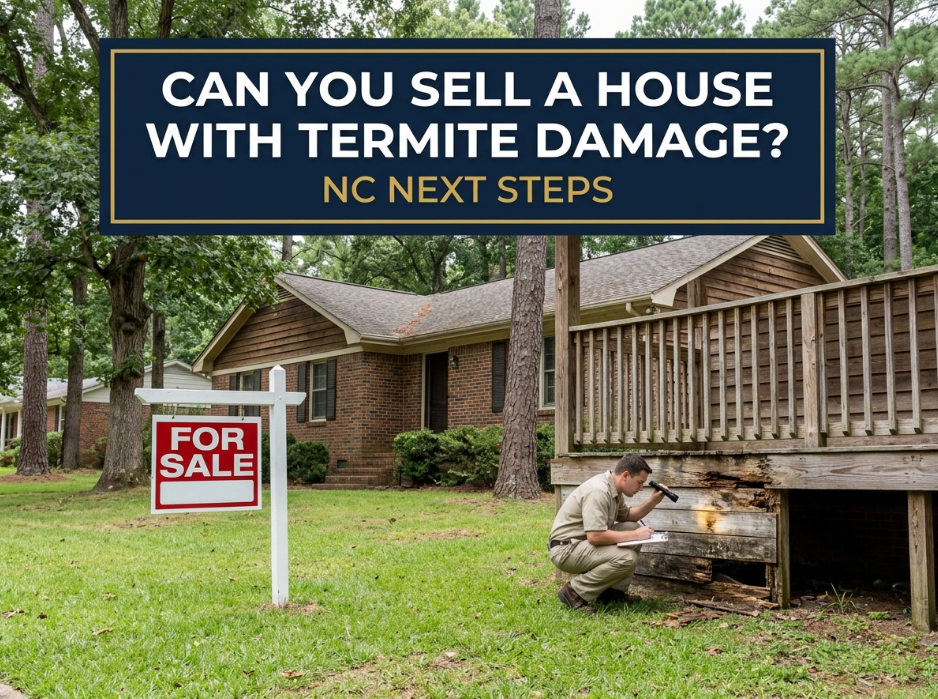
Can You Sell a House With Termite Damage in NC? Active Termites vs. Old Damage
Can you sell a house with termite damage in North Carolina? Yes. The key is whether termites are active, the damage is old and treated, structural wood is affected, and the buyer or lender needs further inspection. A documented past infestation may create negotiation. Active termites plus damaged joists, sills, or subfloor can create treatment, repair, and financing conditions before closing.
Start by separating four questions:
- Are termites active now?
- Is damage structural or cosmetic?
- Is prior treatment documented?
- What will the buyer’s financing require?
Active Termites and Old Damage Are Different Sale Problems
When selling a house with termite damage, do not treat every finding as one problem. Active infestation means current evidence needs professional attention. Old damage may remain visible long after successful treatment and may not mean termites are still feeding.
A buyer needs to know whether the concern is present activity, past activity, unrepaired damage, or all three. That distinction guides treatment, repair estimates, pricing, and negotiations.
Get the North Carolina WDIR Before Guessing
North Carolina uses the official Wood-Destroying Insect Information Report, commonly called the WDIR-100. It records visible evidence of wood-destroying insects and conditions that can encourage subterranean termites.
The report is not a structural inspection and does not guarantee hidden areas are termite-free. It can identify:
- Visible or previous termite evidence
- Wood-to-soil contact
- Cellulose debris
- Excessively wet wood
- Inaccessible areas
If a buyer requests a termite inspection before closing, early documentation can prevent a last-minute surprise.
A WDIR Is Not a Termite Clearance Letter
Sellers sometimes expect a simple “clear” result after treatment. North Carolina guidance says the WDIR is an information report, not a warranty or clearance letter.
Old evidence can still appear after successful treatment. That does not automatically prevent a sale. The follow-up question is whether remaining damage affects the structure.
Review the North Carolina guide to Wood-Destroying Insect Reports for the report’s official scope.
Structural Damage Needs a Different Expert
A pest professional identifies wood-destroying insect evidence. That person is not automatically qualified to decide whether a damaged joist, sill plate, band board, or subfloor remains structurally adequate.
If termites reached structural wood, a qualified contractor or structural engineer may need to answer:
- Is the member still sound?
- Does it need repair or replacement?
- What is the realistic repair scope?
- Can the work wait until after closing?
That prevents treatment from being mistaken for structural repair.
Moisture and Wood Contact Can Keep Risk Alive
North Carolina’s common subterranean termites live in soil and move into structures for food. Moisture, wood-to-ground contact, and cellulose debris can encourage continued activity.
Before you sell a house with termite damage, check for:
- Damp crawl-space wood
- Plumbing leaks
- Poor drainage
- Wood touching soil
- Cellulose debris below the house
Correcting the condition that supports infestation can matter as much as replacing cosmetic damage.
Treatment History Can Help When It Is Documented
A house with a termite history is different from a house with an uncontrolled infestation. Treatment invoices, follow-up inspections, diagrams, and a transferable service agreement give buyers something concrete to evaluate.
Keep:
- Treatment date and method
- Service agreement or warranty
- Follow-up inspection records
- Repair invoices
- Photos of repaired areas
Documentation converts an uncertain history into a timeline.
Buyer Financing Can Change the Next Step
Financing does not create one universal termite rule. Loan program, lender requirements, appraisal findings, WDIR results, and damage severity can all affect closing.
VA requires wood-destroying insect information throughout North Carolina. FHA guidance can require a specialist inspection when infestation evidence appears. Active infestation or required structural repairs may therefore create more friction than documented old damage.
Cash buyers avoid lender property-condition requirements, but they can still inspect and negotiate.
Can You Sell a House With Termites As-Is?
Yes. Can you sell a house with termites without completing treatment and repairs first? An as-is sale can be possible because North Carolina does not generally require sellers to make buyer-requested repairs.
“As-is” does not remove inspection rights or erase known facts. It mainly means the seller does not intend to complete requested repairs.
Fix It Money’s as-is home sale options specifically include properties with mold or termites.
Repair First Only When the Numbers Support It
Treatment and repairs can widen the buyer pool, but every dollar spent does not automatically return through a higher sale price. Separate the cost of controlling active termites from repairing old structural damage.
Decision factor |
Treat and repair first |
Sell in current condition |
| Upfront cash | Higher | Lower |
| Buyer uncertainty | Lower | Higher |
| Financed buyer access | Broader | May narrow |
| Repair risk | Seller carries it | Buyer prices it |
| Timeline | Longer | Potentially shorter |
Get written estimates before choosing either route.
Compare Repair Cost With the Buyer Discount
When you sell a house with termite damage, an as-is buyer may subtract treatment, structural repairs, hidden-damage risk, carrying costs, and a business margin. Ask which deductions come from actual estimates.
At Fix It Money, we explain our direct-sale calculation using after-repair value, repair costs, and buyer margin. Our Raleigh cash-offer guide also shows why repair assumptions deserve review.
Ask the buyer:
- What treatment was budgeted?
- Which structural repairs are assumed?
- What estimate supports the deduction?
- What after-repair value was used?
North Carolina Disclosure Rules Cover Termite Issues
North Carolina’s Residential Property Disclosure Act specifically addresses present wood-destroying insect infestation and past infestation where damage has not been repaired.
For covered transfers, sellers may disclose actual knowledge or choose “no representation” for property-condition items. A knowingly false answer should not be used to hide a condition.
Review the North Carolina residential property disclosure requirements and discuss unusual facts with your broker or closing attorney.
Treat Active Termites Before Hiding the Evidence
Fresh paint, new trim, or patched flooring does not stop an active colony. If termites remain present, treatment should be addressed before cosmetic work hides useful evidence or feeding continues.
A practical order is:
- Identify activity.
- Get treatment recommendations.
- Evaluate structural damage.
- Correct moisture or access conditions.
- Decide which repairs are worthwhile.
- Document completed work.
This sequence gives buyers clearer evidence instead of cosmetic reassurance.
Old Damage Can Still Need Structural Repair
Inactive termites do not make damaged framing automatically safe. Old feeding can leave weakened wood after the colony has been controlled.
North Carolina WDIR guidance says some damage should be assumed when wood-destroying insects have reached wooden members. A building expert can determine whether the area is repaired, acceptable, or structurally significant.
That is why selling a house with termite history requires both infestation status and damage assessment.
Choose the Sale Route From Known Numbers
If active infestation is localized and repairs are defined, treatment may preserve access to ordinary buyers. If damaged floor systems create an open-ended project, a current-condition sale may deserve comparison.
Fix It Money considers termite-damaged North Carolina properties through its direct home-buying options. A property review provides a comparison without requiring repairs first.
FAQs
Can You Sell a House With Active Termites in North Carolina?
Yes. Active termites do not automatically prevent a sale, but treatment findings, structural damage, buyer financing, inspection requirements, and contract terms can affect whether repairs are needed before closing.
Does Old Termite Damage Have to Be Repaired Before Selling?
Not always. Old evidence may remain after treatment. If structural wood was damaged, a contractor or engineer can determine whether repair is necessary before the buyer closes.
Is a North Carolina WDIR a Termite Clearance Letter?
No. The WDIR reports visible wood-destroying insect evidence and conducive conditions. It does not guarantee termites are absent and does not certify structural integrity.
Do VA Buyers Need a Termite Inspection in North Carolina?
VA requires wood-destroying insect information throughout North Carolina. Any required treatment or property repairs depend on the report, appraisal findings, and applicable loan requirements.
Should You Treat Termites Before Selling the House?
Treatment may make sense when active infestation is confirmed, and the cost is manageable. Compare treatment, structural repair, sale price, buyer access, and net proceeds before committing money.