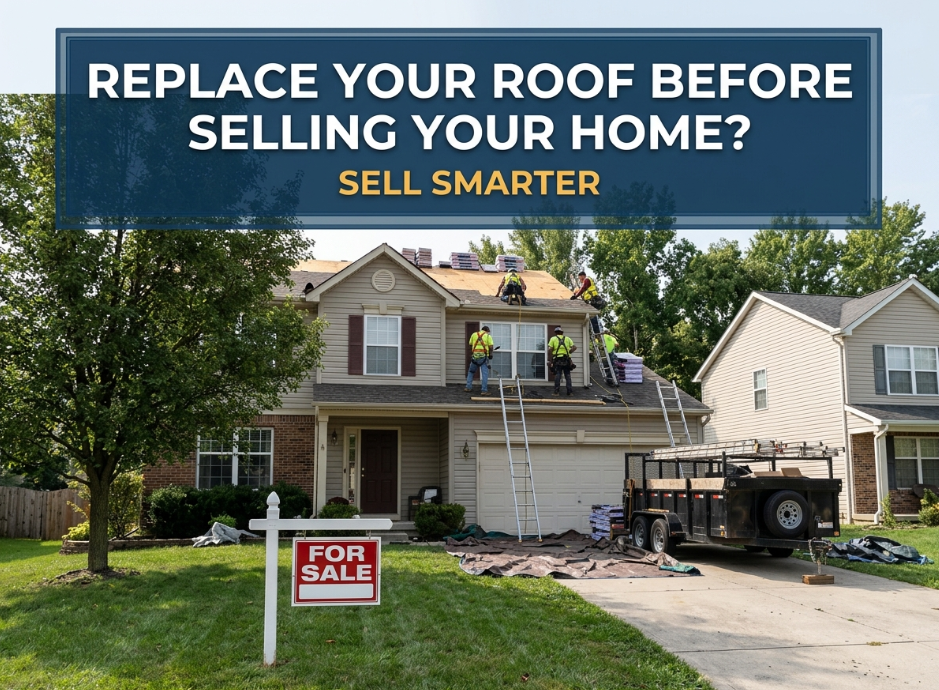
Should You Replace Your Roof Before Selling Your Home in NC?
You do not always need to replace your roof before selling your home in North Carolina. Start with the roof’s actual condition, not its age. A dry, serviceable roof may need documentation only. An active leak, failing shingles, damaged decking, or very short remaining useful life can affect appraisal, insurance, buyer financing, and your final net proceeds.
Check these first:
- Is there an active roof leak?
- How much useful life does the roof have left?
- Will the buyer’s insurer accept the roof?
- Does the appraiser require repair?
- Is repair, credit, replacement, or an as-is sale cheaper?
Should I Replace My Roof Before Selling?
If you are asking, “Should I replace my roof before selling?”, do not start with a replacement quote. Start with a written roof assessment that separates age, isolated defects, and full-system failure.
Ask the roofer to document:
- Roof covering and installation date
- Missing, cracked, curled, or worn roof shingles
- Flashing around chimneys, valleys, and walls
- Roof penetrations and vent boots
- Visible roof decking concerns
- Attic moisture or water staining
- Active or previous leaks
- Estimated remaining service life
That report gives you something useful for pricing, negotiation, appraisal, and insurance.
A 20-Year-Old Roof Is Not Automatically a Bad Roof
Selling a house with a 20-year-old roof can still be possible without replacement. Roofing material, installation quality, maintenance, storm exposure, leaks, and remaining life matter more than one age number.
Before replacing an older roof:
- Confirm the installation year.
- Get a professional condition report.
- Get repair and replacement estimates.
- Ask whether the buyer can obtain insurance.
- Compare likely negotiation with replacement cost.
A dry older roof and a leaking newer roof create very different sale problems.
When a Roof Repair Is Smarter Than Replacement
A new roof before selling a house can be unnecessary when one repairable defect causes most of the concern. Failed flashing, several missing shingles, or one leaking penetration may have a defined repair scope.
Targeted repair makes sense when:
- The roof is otherwise serviceable.
- Decking is sound.
- The leak source is isolated.
- Remaining useful life is reasonable.
- The repair has documentation or a transferable warranty.
Keep the invoice, photos, scope, and warranty. Those records can reduce buyer uncertainty without paying for an entire roof.
An Active Leak Can Become a Financing Problem
A roof problem is no longer just a negotiation issue when it affects property acceptability. Fannie Mae identifies active roof leaks and worn shingles among deficiencies that can require completion before loan delivery.
Before offering a roof credit, confirm:
- Is the appraisal “as-is” or subject to repair?
- Does the lender require the leak to be corrected?
- Does the insurer need more roof documentation?
- Can the buyer use the proposed seller contribution?
- Will a professional inspection resolve the concern?
FHA Buyers Add a Remaining-Life Test
If you are wondering, “Should I replace my roof before selling my house to an FHA buyer?”, the key issue is not simply roof age.
Current FHA guidance says the roof covering must prevent moisture entry and provide at least two years of remaining physical life. A shorter remaining life can trigger a professional roof inspection.
That makes remaining useful life, moisture protection, and visible deficiencies more important than a blanket age rule.
Insurance Can Matter Before Closing
A financed buyer normally needs acceptable homeowners insurance. Even when an appraiser accepts the property, insurance underwriting can create another roof-related hurdle.
North Carolina’s Department of Insurance notes that carriers use different underwriting requirements and advises homeowners to keep roofs in good repair. One carrier’s decision does not automatically predict another carrier’s response.
Give the buyer useful roof records early:
- Installation date and roofing material
- Repair invoices and leak history
- Current roof assessment
- Warranty information
- Storm-claim documents, when relevant
That helps the buyer test insurability during due diligence instead of days before closing.
Do Not Mix an Old Roof With Storm Damage
Normal deterioration and sudden storm damage are different financial problems. Hail, wind, or a fallen tree may involve an insurance claim. Worn-out shingles are generally a maintenance issue.
If damage came from a recent event, document it before permanent work and review whether the policy pays actual cash value or replacement cost value.
That distinction can change the seller’s true out-of-pocket repair cost.
Selling a House That Needs a New Roof Changes the Buyer Pool
Selling a house that needs a new roof is possible, but the buyer pool may change. A retail buyer may want the issue solved before closing. An investor may accept it and price the work into the offer.
Roof condition |
Strongest first move |
Main risk |
| Old but serviceable | Document and list | Buyer may negotiate |
| Localized repair | Repair the defect | Hidden damage may expand scope |
| Short remaining life | Compare replacement and credit | Insurance or appraisal friction |
| Active leak or rotten decking | Repair, replace, or sell as-is | Financed buyers may shrink |
If the roof is only one of several failing systems, compare it with the North Carolina major-repair sale strategy before spending heavily on one project.
Does Replacing the Roof Actually Protect More Equity?
If you plan to replace the roof before selling the house, compare the project with added sale proceeds, not just the expected listing price.
Use this calculation:
Expected repaired sale proceeds
minus roof replacement
minus extra carrying costs
minus financing costs
minus normal selling expenses
Then compare that number with a realistic current-condition net.
If borrowing is required, review the home-repair funding guide before adding new debt solely to prepare the house for sale.
If You Sell As-Is, Make the Roof Deduction Specific
An as-is offer can make sense when replacement needs substantial cash, several systems need work, or the seller does not want to manage contractors.
Fix It Money’s as-is home sale process accepts properties with bad roofs and other major repairs. Its offer calculation process uses after-repair value, repair costs, and buyer margin.
Ask the buyer:
- Is the deduction for repair or replacement?
- Does the estimate include decking and underlayment?
- What contractor estimate supports the number?
- What after-repair value was used?
- Can the offer change after inspection?
A clear deduction is easier to compare than a vague “bad roof” discount.
Replace, Repair, Credit, or Sell As-Is?
If you are still asking “Should I replace my roof before selling?”, match the solution to the actual transaction problem.
- Replace: widespread failure or short remaining life creates a real closing barrier.
- Repair: the defect is isolated, and the roof remains serviceable.
- Credit or price adjustment: the lender and insurer accept the roof, but the buyer wants compensation.
- Sell as-is: the project needs too much cash, other repairs remain, or certainty matters more than managing the work.
Fix It Money can provide a current-condition comparison before you commit cash to replacement.
The goal is not to install a roof you will never use. It is to protect the most usable equity after repair costs, financing, insurance, time, and selling expenses are counted.
FAQs
Do I Have to Replace an Old Roof Before Selling in North Carolina?
Not automatically. A serviceable older roof can still sell if it remains dry, has usable life, and satisfies the buyer’s lender, insurer, and appraisal requirements.
Can I Give the Buyer a Roof Credit Instead of Replacing It?
Sometimes. A seller credit can work when the roof remains acceptable to the lender and insurer, but it may not replace a required physical repair.
Will FHA Approve a House With an Old Roof?
Possibly. FHA focuses on moisture protection and remaining physical life. A roof with less than two years remaining can trigger a professional roof inspection before closing.
Does a 20-Year-Old Roof Automatically Make a House Unsellable?
No. A 20-year-old roof is one risk signal, not a verdict. Material, condition, leaks, remaining life, insurance availability, and financing matter more than age alone.
Should I Sell As-Is if the House Needs a New Roof?
Consider it when replacement needs major cash, other repairs remain, or time matters. Compare the documented as-is offer with replacement cost and expected net proceeds.