Home Inspection Cost in NC: Should Sellers Inspect First?
Home inspection cost in North Carolina typically runs $350 to $600 for a standard single-family house. Sellers usually do not need a pre-listing inspection, but ordering one can reveal defects before negotiations.
- Listing traditionally? A report may help plan repairs and disclosures.
- Selling as-is? You can request a cash offer without paying for your own inspection.
- Already know the damage? A targeted specialist may be more useful.
What Does a Home Inspection Cost in North Carolina?
A typical home inspection cost depends on the property, not a fixed state fee. Published NC estimates run $350 to $600; Angi’s national 2026 average is $344.
| Inspection situation | Budget guidance |
| Standard NC home inspection | About $350 to $600 |
| National benchmark | $344 average in Angi’s 2026 data |
| Larger or unusually complex home | Ask for an individualized quote |
| Radon, termite, septic, or sewer testing | Usually priced separately |
What an NC Home Inspector Actually Checks
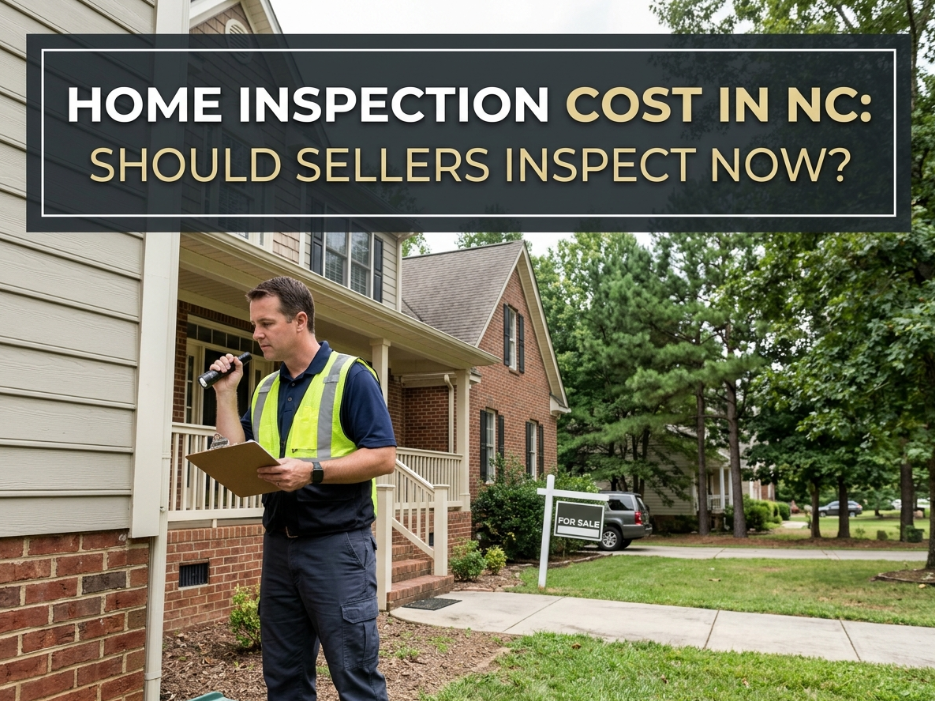
A licensed home inspector conducts a visual examination of accessible components. A report identifies visible defects and their implications but cannot reveal everything hidden inside walls.
- Roof and attic: Visible deterioration, leaks, ventilation, and accessible framing.
- Foundation and crawl space: Movement indicators, dampness, drainage, and exposed supports.
- Electrical: Accessible panels, outlets, and visible wiring concerns.
- Plumbing: Fixtures, supply, drains, and signs of leakage.
- Heating and cooling: Operational concerns with installed HVAC equipment.
- Interior and exterior: Windows, doors, stairs, siding, and visible safety issues.
A standard report is not a warranty. Suspected foundation damage or concealed defects may require a qualified specialist to assess the full repair scope.
Why Home Size Alone Does Not Determine Inspection Fees
Some companies charge by square-footage brackets, but there is no universal home inspection cost per square foot. An older 1,600-square-foot house may need more examination than a newer, larger one.
Before comparing quotes, ask about these price drivers:
- Crawl spaces with difficult access or standing water.
- Detached structures and additional heating systems.
- Optional radon, sewer scope, water, or septic tests.
A standard inspection and a wood-destroying insect report are different services. If you suspect termite damage, ask whether a separate pest professional is needed.
Should You Inspect Before Putting Your House on the Market?
A pre-listing home inspection is worth considering when you intend to attract mortgage-financed buyers and the home’s condition is uncertain. Early findings give you time to request repair estimates.
You may benefit most when:
- A house has older wiring, plumbing, or mechanical systems.
- You inherited the property and do not know its maintenance history.
- You want to price visible defects before advertising the home.
- You can afford the follow-up work or plan transparent repair concessions.
Selling As-Is? An Inspection May Be One Expense to Skip
A seller who already knows the house needs significant work may gain little from paying for a general inspection. A direct buyer can evaluate the property independently before presenting terms.
Our North Carolina as-is home-buying service considers homes with major repair problems. Homeowners are not required to purchase their own inspection just to begin discussing a cash offer.
Consider getting a specialized assessment instead when:
- You need a written structural opinion to resolve an ownership dispute.
- Water intrusion needs diagnosis before you decide whether to repair.
- The true condition is too uncertain to compare the options intelligently.
What Happens When a Seller’s Inspection Finds a Serious Defect?
North Carolina seller disclosures require more care than simply labeling a house “as-is.” Chapter 47E provides a standard disclosure process and specific exemptions, including a “No Representation” option.
The details depend on the transaction:
- Owners generally must deliver applicable disclosure forms within the statutory timetable.
- Licensed brokers have separate duties to disclose material facts they know or reasonably should know.
- If a disclosure becomes materially inaccurate, the owner may need to correct it.
The North Carolina Real Estate Commission’s guidance explains these duties. Ask your closing attorney about your circumstances, particularly if an inspection reveals new water damage or unresolved code violations.
Who Pays for the Home Inspection During a House Sale?
Who pays for a home inspection depends on who orders it and the purchase agreement. Sellers normally pay for their own pre-listing inspection; buyers generally pay for their inspection during due diligence.
Most inspectors collect payment when the appointment occurs or before releasing the report. The fee is not automatically included in mortgage closing costs, even when an invoice can be settled at closing by arrangement.
| Inspection ordered by | Usual responsibility |
| Seller before listing | Seller |
| Buyer after an offer | Buyer |
| Buyer-requested specialist | Negotiated or buyer-paid |
| Investor’s property review | As specified in the agreement |
If a buyer’s inspection identifies problems, repair requests and credits remain matters for negotiation. A seller’s earlier report does not automatically replace the buyer’s inspection.
Does an Inspection Lead to a Lower Selling Price?
There is no dependable average price reduction after a home inspection that applies to every North Carolina sale. The financial effect depends on verified defects, buyer demand, and the contract.
Imagine a $425 inspection identifies moisture in a crawl space. One buyer requests a $9,000 credit; another offers to purchase without repairs. Neither proposal should be judged without checking the repair estimate and net proceeds.
Review selling a house needing major repairs before committing to expensive work. Use the report to decide among:
- Repair: Obtain a contractor quote if a fix may preserve financing or value.
- Credit: Negotiate a documented allowance instead of managing the work yourself.
- As-is sale: Compare a written current-condition offer with realistic listing proceeds.
- Further diagnosis: Investigate significant issues that the general inspection could not determine.
How to Choose a Licensed NC Inspector Without Paying Twice
North Carolina requires paid home inspectors to hold an individual license. Ask for the inspector’s number and verify it through the state’s Home Inspector Licensure Board.
Before scheduling:
- Request an itemized written price and expected delivery time.
- Confirm that crawl-space and attic access are part of the scope.
- Ask which specialty tests are excluded.
The state’s published inspection standards describe the required process and reporting obligations. Avoid ordering a second general inspection when you only need a focused specialist opinion.
Decide Your Selling Route Before Paying for Inspections
A pre-sale inspection can be sensible when preparing for a conventional listing. For a homeowner selling in present condition, it may be an optional expense with limited return.
At Fix It Money, we review property circumstances, discuss potential solutions, and provide written cash offers when appropriate. Our home-sale process explains what happens before closing. Raleigh owners can also review local cash home-buying options.
If you’re unsure whether to spend hundreds on an inspection or compare current-condition offers first, contact us to discuss the property and your preferred timeline.