Selling a House With Asbestos in NC: What Must You Disclose?
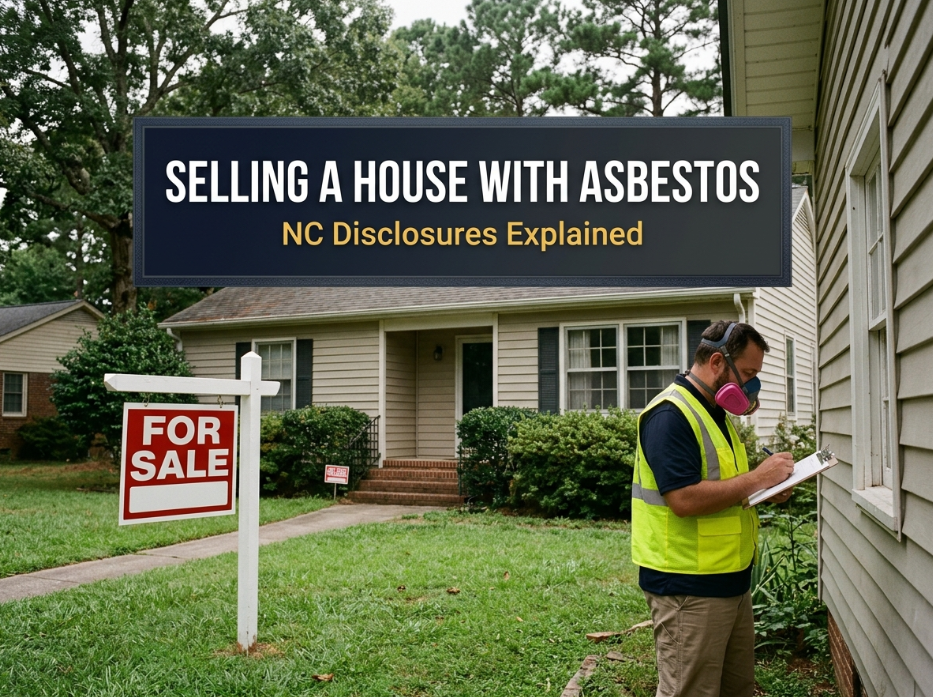
Selling a house with asbestos is legal in North Carolina. You generally do not have to remove intact asbestos-containing materials just to transfer ownership. Their condition, location, and disclosure obligations matter.
North Carolina’s disclosure form addresses asbestos and permits a “No Representation” response. That choice does not eliminate every obligation involving concealed defects or a broker’s duty to disclose material facts.
North Carolina’s Asbestos Disclosure Rule Is Not a Simple Yes or No
Under Chapter 47E, most covered residential sellers must provide the Residential Property and Owners’ Association Disclosure Statement (RPOADS) before a buyer makes an offer. The form addresses asbestos and other environmental hazards.
- Yes: Use the appropriate answer when you choose to disclose confirmed information.
- No Representation: A statutory option, not permission to make false claims or deliberately conceal a material defect.
- Broker disclosure: Licensed agents separately disclose material facts they know or reasonably should know.
- Statutory source: Check North Carolina’s residential disclosure statute.
- Legal review: Hidden material defects can create separate duties; consult a North Carolina real estate attorney about your particular sale.
An As-Is Contract Does Not Make Known Hazards Disappear
Selling as-is generally means the buyer accepts the property’s condition under the agreed contract. It does not automatically protect a seller who misrepresents a serious hidden condition.
If you already have an asbestos laboratory report, an old abatement invoice, or correspondence about damaged insulation, preserve it. Describe what those records establish rather than guessing about untested areas.
What the Condition of Suspected Asbestos Changes
Asbestos may occur in cement shingles, old floor tiles, textured ceilings, pipe insulation, or attic materials. A building’s age alone does not prove which products contain asbestos.
| Material and condition | Sensible next move before selling |
| Intact cement siding | Document its condition; avoid unnecessary disturbance |
| Cracked roofing shingles | Ask an accredited professional to assess damage |
| Loose, crumbling pipe insulation | Restrict access and arrange professional evaluation |
| Old vinyl tile beneath new flooring | Disclose known findings; don’t pull up tiles to check |
Friable asbestos can release fibers more readily when crumbled or disturbed. Intact, bonded nonfriable materials generally present less exposure risk unless sanding, cutting, demolition, or deterioration releases fibers.
Two Older Houses May Need Completely Different Sale Plans
Picture two North Carolina homes. One has intact, painted asbestos-cement shingles; the other has loose, damaged pipe insulation near an area scheduled for renovation. Their risks and costs differ.
- Intact siding: An accredited professional may recommend leaving stable material undisturbed rather than replacing the entire exterior solely for resale.
- Damaged insulation: Restrict access and obtain a specialist assessment before contractors open walls, disturb insulation, or begin demolition.
- Both properties: Buyers need accurate information, not a seller’s promise that every suspicious material has been removed.
Can You Sell a House With Asbestos Siding or Roofing?
Yes. Asbestos-cement siding and older roofing products do not automatically prevent a North Carolina sale. Their physical condition and planned work are more important than appearance alone.
- Intact siding: Replacement may be unnecessary solely for resale.
- Broken siding: Seek professional advice before cutting, drilling, or removing it.
- Asbestos roof: Consider leaks, damaged shingles, and the buyer’s intended renovations.
- Major roof replacement: Confirm the scope of asbestos handling before accepting a contractor’s ordinary roofing estimate.
Our guide to whether to replace a roof before selling covers the broader financial decision. It does not replace an asbestos assessment.
Testing Before Listing: Useful Evidence or an Unnecessary Bill?
No general federal law requires asbestos testing before selling a home. If the material is only suspected, an NC-accredited asbestos inspector can arrange proper sampling and laboratory analysis.
Testing may help when a buyer disputes the material, a renovation will disturb it, or a contractor needs a reliable scope. Don’t drill into suspicious siding or scrape ceilings yourself.
Repair, Encapsulation, or Removal: Match the Work to the Risk
Asbestos abatement is not automatically the same as removing everything. A professional may recommend leaving sound material alone, enclosing it, sealing it, or removing damaged material safely.
| Approach | When it may fit | What to remember |
| Leave intact | Stable material unlikely to be disturbed | Tell buyers what is actually known |
| Encapsulate or enclose | Appropriate material can be safely isolated | Asbestos remains in place |
| Remove | Severe damage or planned disturbance | Confirm qualified personnel and disposal requirements |
North Carolina’s guidance on asbestos in home renovations recommends accredited inspectors. Requirements differ according to the building, contractor, and work; never assume that every residential project needs the same permit.
What Does Asbestos Removal Cost Before Selling?
There is no honest flat price for asbestos removal across North Carolina. Asbestos remediation costs change with material type, affected area, access, containment, labor, and disposal requirements.
Ask for a written, itemized scope separating inspection, sampling, removal, disposal, and any replacement construction. An ordinary siding or roofing quote may leave important hazardous-material expenses out.
Will a Mortgage Buyer Still Be Able to Purchase the House?
Asbestos presence alone does not create a universal mortgage prohibition. A buyer’s lender, insurer, inspector, or appraiser may raise concerns when damaged materials affect safety or property condition.
A financed buyer may request additional documentation, repairs, or a credit. Some transactions proceed without removal; others face delays. Avoid promising approval based only on the house having intact siding.
Negotiate the Cost of a Known Problem, Not a Guess
Suppose an older house has confirmed asbestos siding, but no damaged panels. A buyer requests a large price reduction anyway. Ask what work the proposed discount actually covers.
- Obtain a qualified assessment if the material’s condition remains uncertain.
- Compare removal quotes with reasonable repair credits, not an arbitrary percentage.
- Calculate your actual net proceeds after commissions, holding costs, and any agreed work.
- Keep a paper trail of inspection reports and repair agreements.
A contractor’s estimate may affect negotiations, but it does not establish the home’s market value. Review our guide to selling a house that needs major repairs if several defects compete for your budget.
Prepare a Clear Record for the Buyer and Closing Attorney
Clear documentation helps buyers separate confirmed asbestos from assumptions. It also prevents a later inspection from becoming an argument about what the owner knew before accepting the offer.
- Gather laboratory results, asbestos inspection reports, contractor proposals, invoices, warranties, and any relevant permit records. Identify where samples were taken and what work followed.
- If alterations lacked required approvals, our unpermitted-work selling guide explains the separate concern. New paint is not proof that asbestos was removed.
When an As-Is Cash Sale May Make More Sense
Paying for removal before selling may not improve your outcome when the home also needs substantial repairs. Compare a realistic listing scenario with an actual as-is cash offer.
- At Fix It Money, we review North Carolina properties in their current condition and explain potential offers. Our property review does not replace professional asbestos inspection or abatement.
- Our as-is home-selling service lets you discuss options before renovation. Review our buying process and confirm the terms for your property.
Decide What to Do Before Anybody Disturbs the Material
A house with asbestos is still sellable. The costly mistake is deciding before you know whether the material is confirmed, intact, damaged, or likely to be disturbed.
Keep people away from visibly damaged areas, obtain appropriate professional guidance, and compare documented options. If a direct sale fits your circumstances, contact us about your North Carolina home for a no-obligation property discussion.