
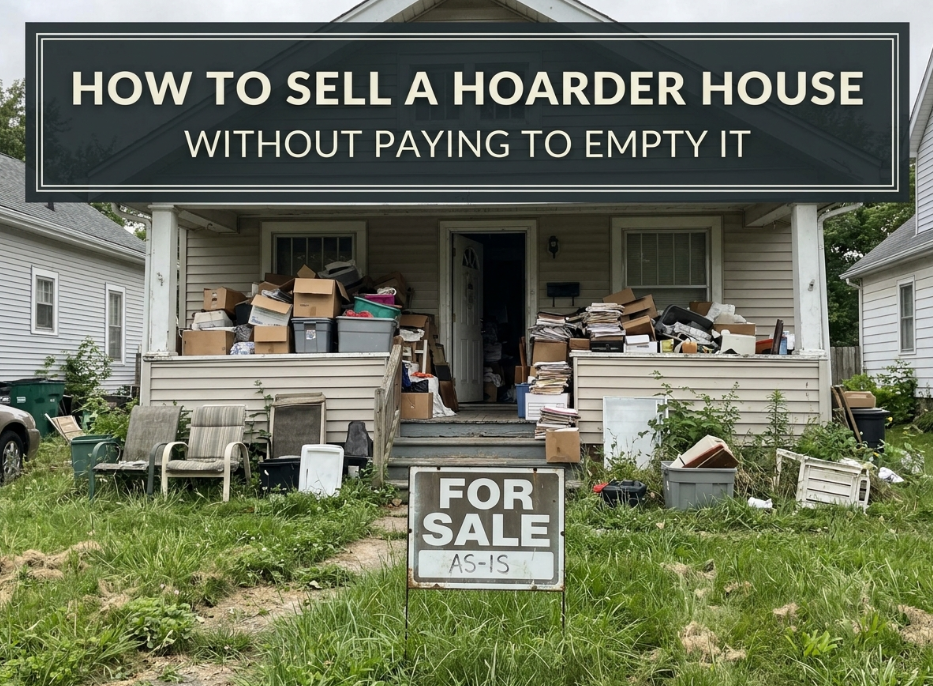
How to Sell a Hoarder House Without Paying for a Full Cleanout First
If you need to know how to sell a hoarder house, do not automatically order dumpsters or pay for a whole-house cleanout. First, separate what must be protected, what a buyer needs to inspect, and what can stay until after closing.
In North Carolina, a full cleanout may improve marketability, but it can also expose repairs, consume cash, and delay the sale.
Start with three decisions:
- What belongings must be removed before anyone else takes control?
- How much access does the buyer actually need to price the property?
- Will cleaning first increase your net proceeds enough to justify the cost?
Do a Rescue Sweep Before You Do a Cleanout
The first job is protecting anything difficult or impossible to replace. A short rescue sweep can do that without turning the property into a full cleanout.
Remove or secure first:
- IDs, deeds, tax papers, wills, insurance records, and financial documents
- Cash, jewelry, collectibles, family photographs, and sentimental items
- Prescription medications and sensitive personal records
- Keys, vehicle titles, safe-deposit information, and account paperwork
- Items specifically promised to heirs or other family members
If this is an inherited property, confirm who has authority over the personal property before discarding, donating, or selling estate contents. The North Carolina Judicial Branch estate guidance explains that furniture, jewelry, and other personal property may be estate assets.
A Full House Does Not Tell You What the House Is Worth
Clutter affects access and buyer confidence, but it does not automatically mean major structural damage. One packed home may need hauling only. Another may hide water damage, pests, or deferred maintenance.
That uncertainty is why buyers price the property underneath the belongings.
Useful property facts include:
- Roof and foundation condition
- HVAC, plumbing, and electrical condition
- Visible moisture or pest activity
- Rooms or systems that cannot be accessed
- Known code notices or repair reports
- Approximate volume of contents that will remain
Fix It Money’s property review process says photos are often enough for an initial review and that sellers do not need to clean first.
Decide Whether Access, Not Cleanliness, Is the Real Problem
A buyer does not necessarily need empty rooms. The key question is whether enough can be seen to evaluate major systems, layout, safety, and likely repairs.
A minimum-access cleanout can be much smaller than a full cleanout. It may mean clearing only a walkway, electrical panel, water heater, crawl-space entrance, or one blocked room.
Condition |
Practical response |
| Rooms are cluttered but walkable | Leave contents and document visible condition |
| Important systems are blocked | Clear targeted access only |
| Floors cannot be seen anywhere | Consider limited clearing for inspection |
| Animal waste, heavy rodent activity, or unsafe debris is present | Avoid casual DIY handling and use appropriate professional help |
| Structure appears unsafe to enter | Do not create access simply for a showing |
This avoids paying for a whole cleanout when the buyer mainly needs better access.
Price the Cleanout Against the Extra Sale Proceeds
The right question is not “How much will a cleanout cost?” It is “How much more money will the cleanout realistically put in my pocket?”
Professional hoarder cleanouts are driven by volume, labor, disposal, access, and hazardous conditions rather than square footage alone.
Use this simple comparison:
Expected retail net after cleaning
minus cleanout, repairs, holding costs, commissions, and seller expenses
versus
As-is net with contents remaining
minus only the costs you actually owe under that sale
If the cleanout costs $8,000 but improves net proceeds by $35,000, cleaning may be worthwhile. If it exposes $40,000 in repairs and delays the sale for months, the answer can reverse.
Hidden Damage Is the Biggest Cleanout Wild Card
When selling a hoarder house, the true repair scope may stay hidden until floors, walls, windows, and mechanical systems become visible.
A cleanout can reveal:
- Moisture damage behind stored furniture
- Pest damage or contamination
- Subfloor deterioration
- Broken fixtures or plumbing leaks
- Damaged drywall
- Deferred electrical repairs
- Odors that remain after contents leave
If those discoveries become known material property defects, they can affect disclosure and negotiation. North Carolina brokers have a duty to discover and disclose material facts that could influence a reasonable buyer’s decision. See the North Carolina Real Estate Commission material-fact guidance.
Selling a Hoarder House Does Not Require a Showroom Finish
For a traditional listing, some cleaning may be needed for photos, showings, inspections, and buyer financing. That still does not mean every room needs renovation.
A seller can stop once the house becomes understandable.
That may mean:
- Remove obvious trash and spoiled materials
- Create safe walking paths
- Make major systems accessible
- Deep clean only after contents leave
- Repair active leaks or immediate hazards
- Skip cosmetic remodeling unless the numbers support it
If hidden defects turn the project into a larger renovation, compare the numbers with Fix It Money’s guide to selling a house that needs major repairs in North Carolina.
An Inherited Hoarder House Needs a Different First Step
When selling a hoarder’s house after a death, contents may still be legally or financially important. Family members may disagree about photographs, furniture, collectibles, documents, or specific gifts.
Before hiring a crew, identify:
- Who can authorize removal or sale of personal property
- Whether a will names specific items for beneficiaries
- Whether relatives need an opportunity to retrieve belongings
- Which documents relate to the house, debts, insurance, or taxes
- What will remain in the property at closing
If probate and ownership are also unresolved, the North Carolina inherited-property foreclosure guide explains why legal authority and title should be confirmed before relying on a sale timeline.
Ask Exactly What Can Stay Before You Sign
If you plan to sell a hoarder house to a cash home buyer, do not rely on a casual statement such as “leave everything.” Make the remaining contents part of the transaction discussion.
Ask the buyer:
- Can furniture remain?
- Can closets, attic, garage, and sheds remain full?
- Are appliances staying?
- Is any separate cleanout charge deducted later?
- Must hazardous materials be removed?
- What happens if an inaccessible room contains unexpected damage?
- What does the contract say about personal property left after closing?
A seller should know whether the cleanout burden truly transfers or simply returns later as a price reduction.
Compare the Buyer’s Deduction With Real Cleanout Quotes
A direct buyer will usually account for cleanup, repairs, holding time, resale costs, and risk. The deduction should still make sense.
Before accepting an offer, get at least enough information to estimate:
- Likely cleanout volume
- Two local hauling or cleanout quotes, when safely obtainable
- Known repair costs
- As-is property value
- Likely value after cleaning
- Mortgage, liens, taxes, and closing costs
Then compare net proceeds, not only the headline offer.
At Fix It Money, our North Carolina as-is home sale option accepts hoarder houses, trash, debris, abandoned furniture, and old belongings without requiring cleaning first. Our Raleigh cash-buyer page also describes direct purchases of distressed homes in current condition.
Leave the House Full Only After You Know the Tradeoff
The best way to sell a hoarder house without a full cleanout is to focus on what actually affects ownership, safety, access, value, and closing.
Protect valuables and documents first. Create only the access that helps a buyer understand the property. Price a full cleanout against the extra net proceeds it could create. If the numbers do not justify the work, negotiate a sale where the remaining contents transfer with the house.
That approach can save money without giving away value simply because the property looks overwhelming today.
Frequently Asked Questions
Can you sell a hoarder house without cleaning it first?
Yes. A direct buyer may purchase the property with contents still inside, but the contract should clearly address remaining belongings, price assumptions, access, and cleanup responsibility.
How do I sell a hoarder house if I live out of state?
Start by securing ownership documents, valuables, and estate authority. Then use photos, a local representative, or a buyer walkthrough to compare cleanout and as-is sale options.
Should I remove everything valuable before selling a hoarder house?
Yes. Remove cash, jewelry, legal papers, photographs, collectibles, medications, and anything promised to family members before closing or before another party controls the home’s contents.
Does a hoarder house have to be cleaned before an appraisal or inspection?
Not always, but blocked rooms and inaccessible systems can limit what an appraiser or inspector can evaluate. Targeted access may be enough without a complete cleanout.
Is selling a hoarder house to a cash home buyer always better?
No. Compare the buyer’s cleanout and repair deductions with real cleanup quotes, expected retail proceeds, holding costs, and your available time before choosing the sale route.